


Picture Hanging Plates: How to Choose, Mount, and Stay Safe
You're standing beneath a framed piece you've just hung when you notice it sitting slightly crooked. The frame feels heavier than expected, and the small plate on the back doesn't look especially secure. Before you adjust it again, check the whole setup: the frame, the plate, the screws, and the wall all have to work together.
Picture hanging plates aren't interchangeable. A plate that suits a lightweight frame may be a poor choice for a heavier piece, while a sturdy plate can still fail if its screws bite into weak frame material or its wall fasteners don't suit the substrate. The practical decisions are about more than a product's load rating. They include how the frame is built, where it'll hang, the condition of the wall, and whether the artwork needs conservation-minded placement.
This guide walks through the choices installers make, from matching plate type to frame and weight to checking screw length, choosing wall fasteners, and recognizing environmental risks. You'll also find a repeatable installation method and a clear point at which bringing in a professional is the safer move.
Why the Right Picture Hanging Plate Matters
A frame that starts to lean after installation is often telling you that something in the system is mismatched. A small plate on a heavy frame may pull against a narrow or fragile rail; a screw that's too long can threaten the artwork or glazing; and a strong plate mounted to an unsuitable wall fastener won't make the wall connection reliable. Each part affects the others.
That's why installers assess the object, frame, and wall as a unit. The plate needs enough capacity for the complete assembly, but it also needs enough sound frame material to hold its screws. The wall fasteners must suit the wall, and the chosen position should let the frame hang level without concentrating the load at a vulnerable point.
On-site rule: Don't select the plate before you know the frame's construction and the total weight you're supporting.
Picture hardware has evolved in response to the need for more controlled positioning and load transfer. A U.S. patent for an adjustable picture hanger points to an earlier device patented in 1901, while later patent activity describes picture-hanging assemblies that use plates and rings to support frames through fasteners. The historical record shows that plates are functional mounting components, not decorative add-ons. Their hole layout and placement affect how the load moves from the frame to the wall. The patent record for picture-hanging hardware
The artwork itself matters, too. If you're planning a rustic display, a farmhouse picture frames guide can help you think through frame styles and presentation. But decorative fit doesn't replace a sound mounting decision. A substantial frame, valuable artwork, or uncertain wall calls for more care than choosing a plate based on appearance alone.
The right approach begins with the assembly's weight and the frame's ability to hold the hardware. Then consider the wall, the room's conditions, and the consequences of a failure. That's what makes plate selection a system decision, not a quick trip to the hardware aisle.
Matching Plate Type to Frame and Weight
Start with the back of the frame. Its rail width, material, and condition narrow the options before you compare hardware. A plate that fits one frame neatly may not have enough room for its screw pattern on another.
D-rings are a common choice for framed work that needs two separated attachment points. Their plates screw into the side rails, and the rings connect to wall hooks or other supports. Product ratings vary by design: single-hole D-rings are commonly listed around 5–15 lb, while double-hole versions are often listed around 40 lb. These are product-specific benchmarks, not universal capacities, so follow the manufacturer's rating and screw requirements. A practical guide to D-ring selection and installation
Sawtooth plates are often used on lighter frames that need straightforward hanging and easy repositioning along a wall hook or nail. Their compact shape can be convenient, but they provide less freedom to adjust placement than a two-point D-ring setup. Don't assume a sawtooth plate suits a heavier frame just because it fits neatly on the back. Check the product rating and the strength of the rail.
French cleats spread support across a longer area, making them useful for larger or heavier pieces when the frame construction can accept a cleat. The trade-off is that a cleat takes up more room and needs careful alignment. It can be a sound choice where a small plate would concentrate force in a limited area.
A plate-and-wire assembly may be convenient for familiar, flexible hanging, but the wire changes how the frame carries the load and can allow the artwork to shift. For valuable or heavier work, installers often choose two independent attachment points rather than relying on a single central wire.
Plate family | A sensible starting point | Main trade-off |
|---|---|---|
D-ring plates | Framed work with sound side rails | Requires accurate matching and placement |
Sawtooth plates | Lighter frames suited to a compact hanger | Limited adjustment and product-specific capacity |
French cleats | Larger pieces with compatible frame construction | Needs room and precise alignment |
Plate with wire | Frames where flexible hanging is useful | Wire can shift and stress frame components |
Treat this as a starting comparison, not a capacity chart. The frame's material, screw placement, and manufacturer's specifications determine whether a particular plate is appropriate.
Pre-Install Checks That Prevent Most Failures
Weigh the complete assembly before buying hardware. Include the frame, glazing, mat, backing, artwork, and any attached components. The working benchmark is hardware rated for at least 1.5 times the measured total weight. That margin is useful only if the screws, frame material, and wall connection can also carry the load.
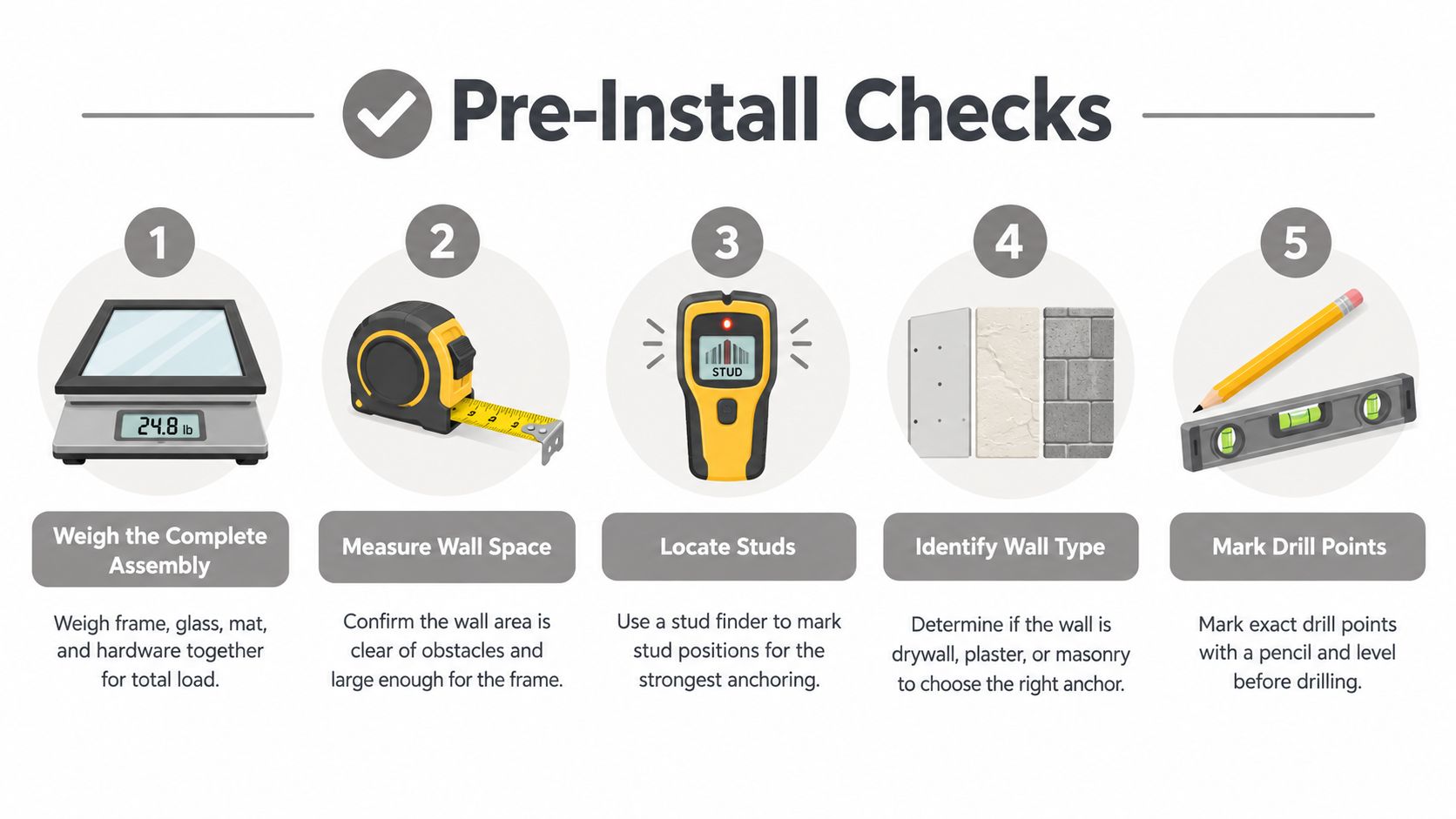
Next, inspect the frame rails where the plates will sit. Don't drill into cracked, loose, or soft material. If the rail is too narrow for the plate's screw pattern, or you can't tell whether it will hold, stop and reassess the hardware or seek help.
Position the plates before drilling
For a two-point D-ring installation, position matched plates on the side rails roughly one-quarter to one-third of the frame height below the top edge. Measure both locations from the same reference edge so they land at the same height. A tape measure and pencil make this more reliable than estimating by eye.
Drill pilot holes appropriate to the screw diameter, then use the supplied screws if they suit the frame. Check the screw length against the rail depth before driving it. A screw must hold the plate securely without emerging through the inside of the frame or reaching the artwork or glazing.
Smithsonian guidance: Choose sturdy, appropriately sized hardware, anchor wall hooks into studs where possible, and add a supporting bracket beneath large, heavy paintings. Smithsonian guidance on caring for paintings
Before moving to the wall, confirm that both plates sit flat, their screws are secure, and the frame material around them remains intact. If any part flexes, splits, or feels loose, don't treat the installation as ready just because the screws are in place.
Mounting Picture Hanging Plates on the Wall
The frame-side plates determine the spacing between your wall supports. Start by locating the wall structure: a stud is usually the preferred fixing point where the layout allows it, while drywall anchors are an option when you can't align both supports with studs. Choose fasteners that match the wall and the expected load. If you're unsure which screw or anchor is appropriate, these CS1 Real Interiors fastener tips offer useful context on wall-side choices.
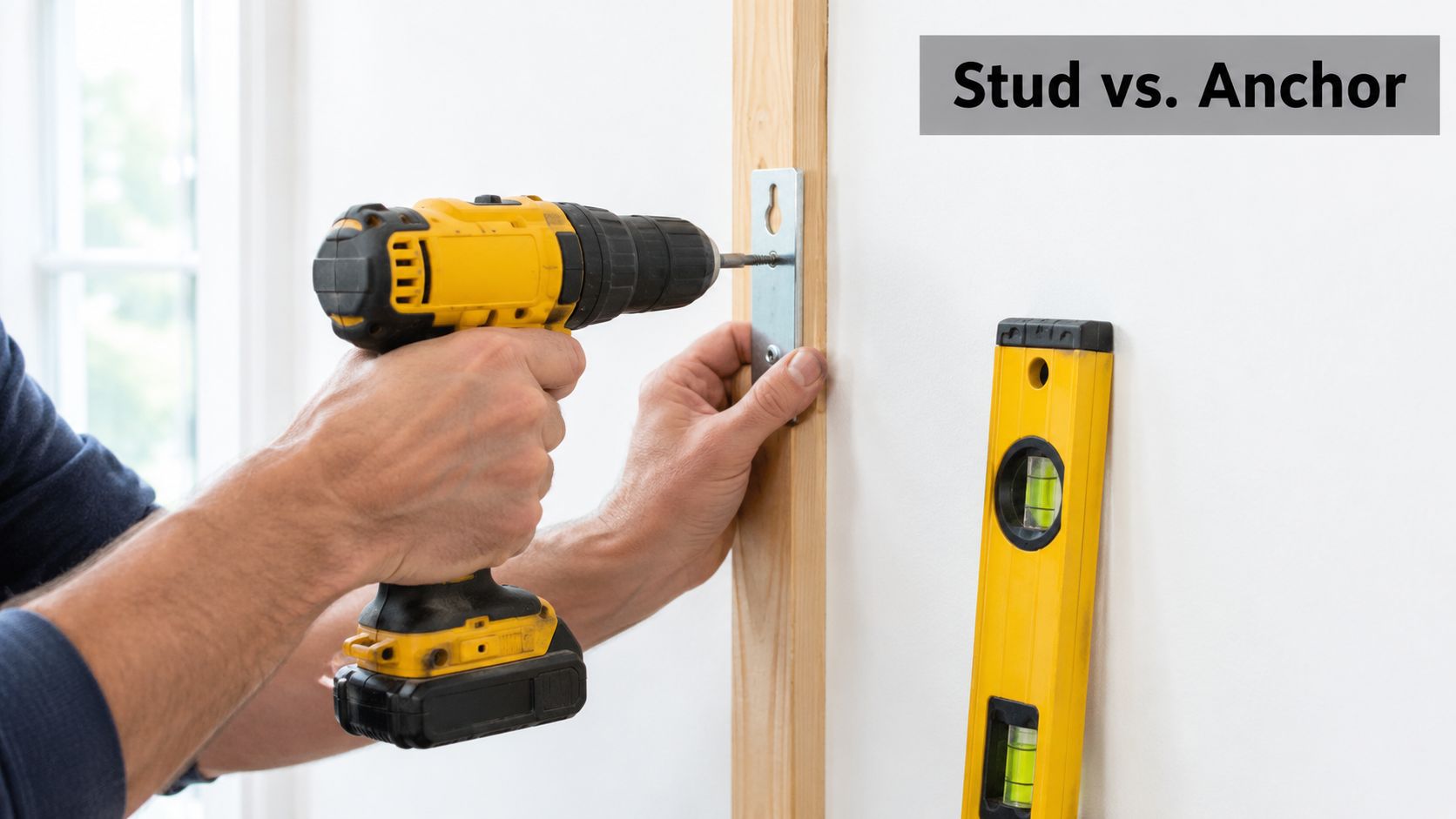
To transfer the plate spacing accurately, measure between the plates on the frame and mark both wall points from the same reference. Painter's tape can give you a temporary marking surface, and a level helps keep the marks aligned. Before drilling, hold the frame near the wall and check that the planned support points correspond with the plate positions.
Use a drill and bit suited to the wall and selected fastener. Seat the fastener firmly, but don't over-tighten: excessive force can damage the anchor, wall, or screw head. If the wall construction is unclear or the mounting points don't align as expected, pause rather than improvising with a fastener that only appears to fit. For a more detailed overview of wall mounting, see how to mount artwork.
Two independent wall points help keep a frame level and reduce side-to-side movement compared with a single central wire. This is particularly useful when the frame is substantial or precise positioning matters. Lower supports or appropriate stabilizers can also help keep the bottom edge from wandering.
The video below demonstrates a wall-side drilling and mounting process. Treat it as a visual reference, and always follow the instructions for the specific plate and fasteners you're using.
Hang the frame, then check that it sits level and rests as intended against the wall. Apply a gentle downward and outward test while keeping a hand ready to support the piece. Look for plate flex, screw movement, or a changing frame position before stepping away.
Wall Substrate and Environment Considerations
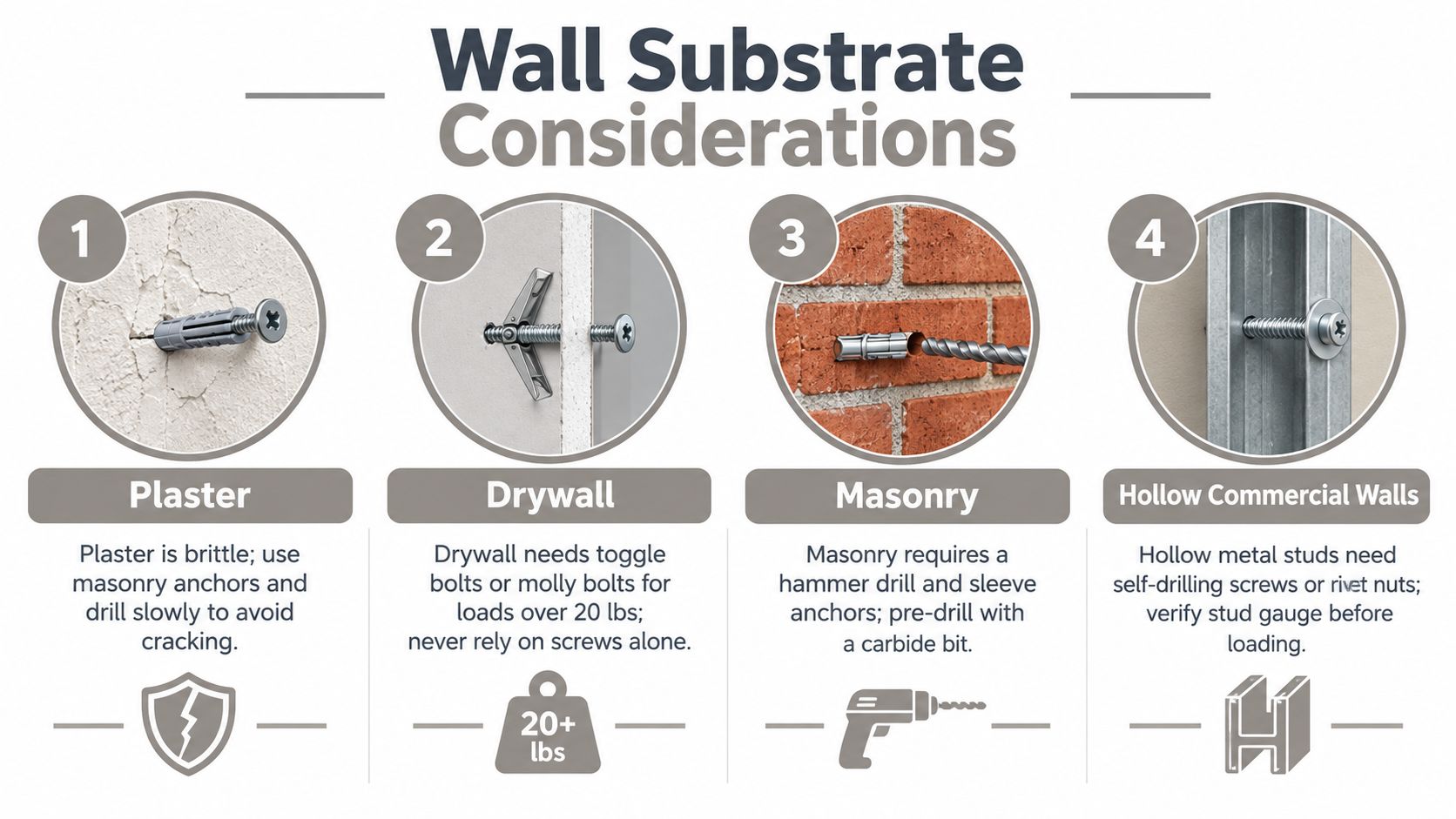
A plate's rating describes the hardware, not the strength of the wall behind it. Drywall, plaster, masonry, and hollow commercial walls each require a different fixing strategy. The same frame and plate may be appropriate in one location and unsuitable in another because the substrate can't securely hold the fastener.
Plaster needs particular care because impact can crack it. Don't assume a nail that works in drywall will behave the same way in plaster. Choose a suitable screw-and-anchor method or a picture-rail approach, and drill carefully. Masonry calls for fasteners designed for that material, while hollow commercial walls may require a fixing that engages the wall system appropriately. Identify the construction rather than guessing from the painted surface.
Consider the room as part of the mounting plan
The location can affect both the wall connection and the artwork's long-term condition. Museum guidance advises avoiding outside walls prone to moisture, along with direct sunlight, heat sources, vents, and unstable environmental conditions. If the only available location raises those concerns, selecting a higher-rated plate doesn't solve the preservation problem.
Humidity and coastal conditions also make hardware material worth considering. Match the hardware to the environment, and inspect it over time for corrosion or other changes. In commercial settings, vibration can make a secure installation less forgiving, so the attachment and ongoing checks matter. Fire-rated wall assemblies and specialty finishes may have their own constraints; don't drill until you understand what the proposed fastener would penetrate.
Frame preservation belongs in this decision, too. For heavy frames, conservation guidance from the University of Delaware cautions against threaded screw eyes because they can loosen, and identifies D-rings or cleat systems as more reliable alternatives. The right plate still needs sound frame material and a compatible wall connection. For ideas on displaying framed pieces while respecting their presentation, these tips from Famous Movie Posters can help with the visual side of the decision. For wall-fastener choices, consult this anchor selection guide.
Why a Higher Load Rating Is Not Always Safer
A high-rated plate can't compensate for a cracked frame rail, a misplaced screw, or a wall fastener that doesn't suit the substrate. It also can't protect artwork from an overlong screw that penetrates the frame's interior. The number on the package applies to the specified product under its stated conditions, not automatically to the entire installation.
That distinction matters with picture wire, too. The Nebraska State Historical Society notes that wire suspension can place stress on frame components and may eventually snap. For valuable or heavy work, two separated attachment points or a suitable cleat can provide a more controlled support arrangement. The Nebraska State Historical Society's guidance on caring for frames
A stronger part doesn't make a strong system if the frame or wall connection is the weak point.
The practical priority is to verify each link: plate and screw compatibility, sound frame material, appropriate wall fasteners, and accurate installation. A nominal plate rating isn't a guaranteed wall capacity, and there's no reliable industry-wide success-rate figure for picture plates. Conditions vary too much across frames, walls, fasteners, and installation quality. Buy hardware for the actual assembly, not the most impressive number on the shelf.
When to Call a Professional Art Installer
Handle a straightforward, lighter frame yourself when the rails are sound, the wall type is clear, and you can choose compatible hardware and install it accurately. Stop and get professional help when the frame is heavy or valuable, the mounting material is cracked or uncertain, the wall construction is unfamiliar, or the planned location raises conservation concerns.
A professional installer is also the sensible choice for coordinated gallery layouts, large-format displays, high placements that need specialist access, and pieces that require careful handling. Those jobs involve more than attaching a plate. They call for coordinated positioning, assessment of the wall and frame, and a plan for supporting and stabilizing the artwork.
Before leaving any installation, check that the frame is level, then test the mount gently for movement. Inspect the plates and screws, confirm the wall connection hasn't shifted, and recheck the piece if the wall is exposed to vibration. If anything flexes, loosens, or changes position, take the frame down and reassess instead of adjusting it while it remains unsupported.
For a heavy piece, complex layout, or installation where you're unsure about the frame or wall, contact art installation experts. A careful assessment before drilling can help protect both the artwork and the surface it hangs on.
Colorado Art Services provides residential and commercial art installation, including heavy-piece mounting, gallery layouts, high-placement installs, and careful assessment of frame and wall conditions across the Denver Metro area and Front Range. If you want help choosing and installing picture hanging plates for your space, visit Colorado Art Services to discuss your project.
Comments