


Denver Art Galleries: 7 Spots Worth Your Afternoon
How much art can you realistically see in a Denver afternoon without spending most of it checking hours, moving the car, or rushing past paintings? The better question isn't which Denver art galleries rank highest. It's which places fit the visit you want: a quick stop, a museum deep dive, or a collector's browse.
These seven venues span encyclopedic collections, changing contemporary exhibitions, commercial galleries, and a museum devoted to a single artist. Civic Center and the Golden Triangle make a sensible cluster for museums and neighboring galleries. LoDo offers a different afternoon, pairing contemporary gallery visits with MCA Denver.
Choose a cluster rather than trying to finish the whole list. Each entry explains the trade-offs, suggests when to visit, and directs you to current hours and admission information without treating changeable ticket prices as permanent facts. Before leaving, confirm exhibition dates, access arrangements, and the last admission time. A shorter route with room to linger beats an ambitious itinerary spent watching the clock.
1. Denver Art Museum
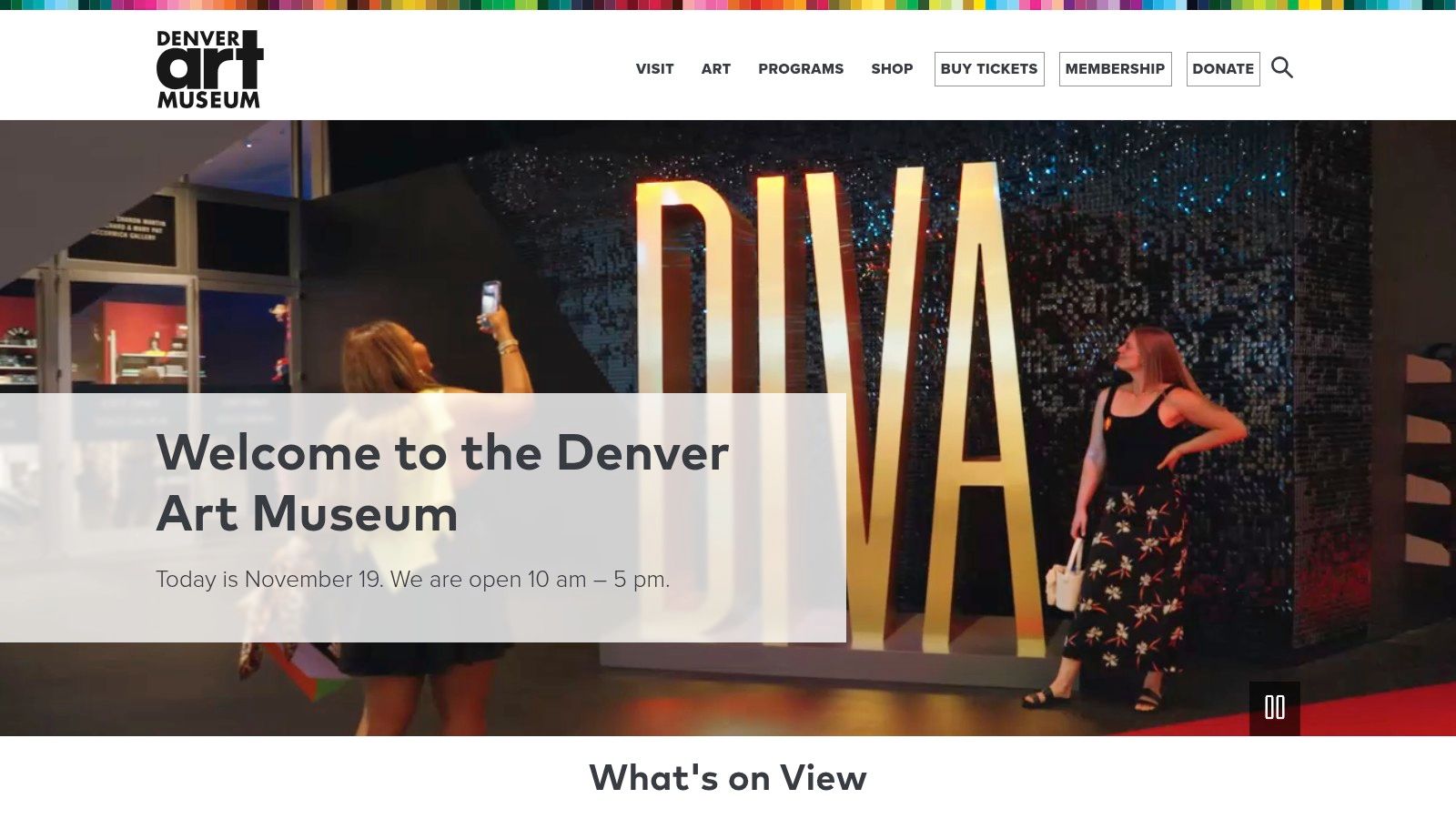
Best for a half-day deep dive. Denver Art Museum is the strongest choice when your group has different tastes. Indigenous arts, photography, textiles, design, and modern and contemporary work give you several ways into the collection, rather than a single aesthetic to agree on.
The scale matters: the Denver Art Museum's institutional overview reports more than 80,000 works across 13 collections. That describes the collection, not what you'll see during a visit, so don't approach the campus as something to complete.
Choose a direction before entering
Pick a collection that interests you, then leave room for a changing exhibition or an unexpected discovery. Moving between buildings and gallery areas takes attention as well as time; an unfocused visit can become more navigation than looking.
Timing: Make this your afternoon's anchor, not a squeezed-in stop between galleries.
Admission: Check the museum's official website for current tickets, closures, free-entry opportunities, and any separate exhibition charges.
Pairing: Add Gallery 1261 or William Havu Gallery for a commercial-gallery contrast, provided their visiting hours align.
The advantage is breadth. The drawback is that breadth makes it easy to overbook yourself. If regional work is your priority, this guide to art in Colorado can help sharpen what you're looking for before you enter.
2. Museum of Contemporary Art Denver (MCA Denver)
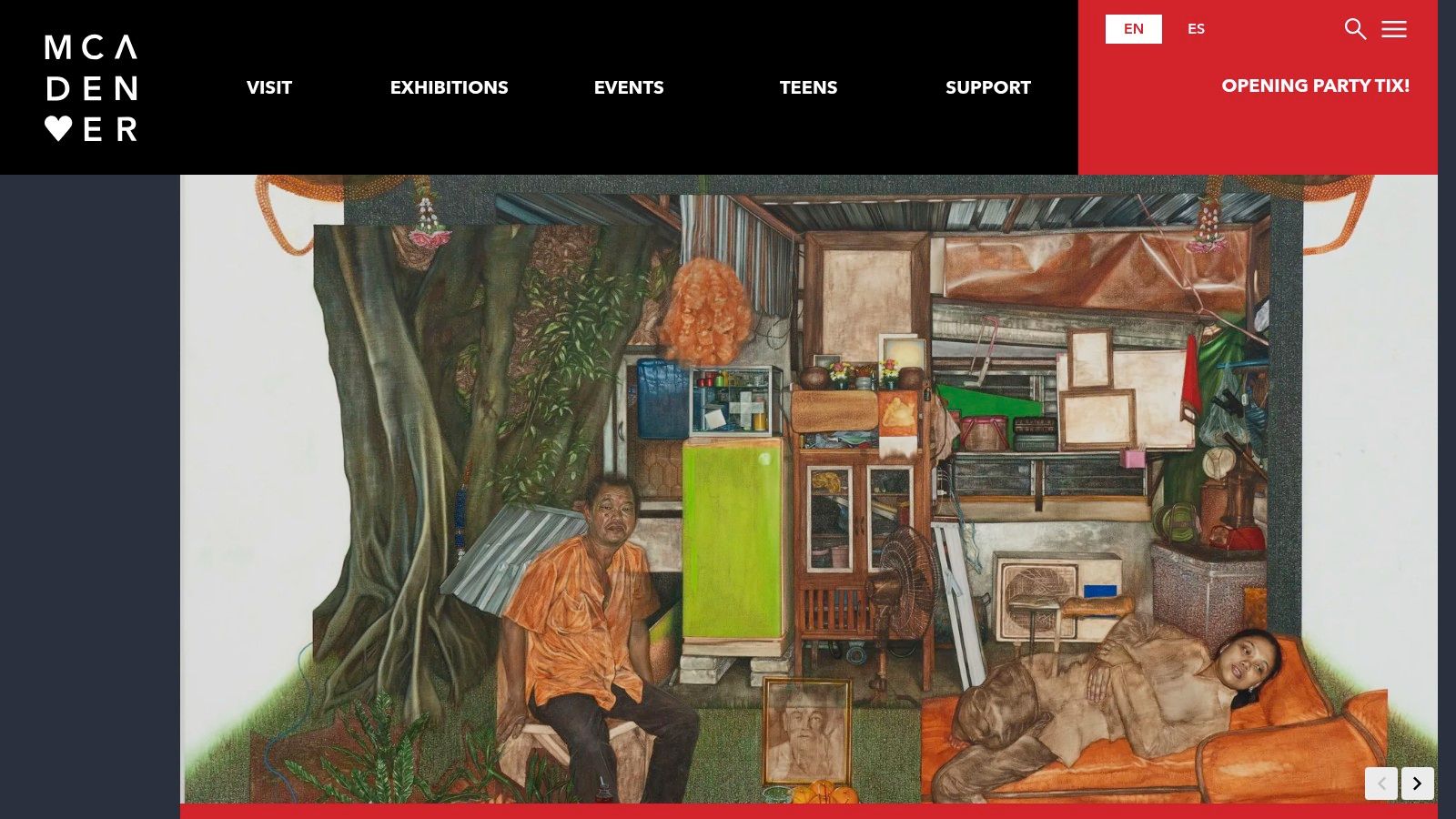
Choose MCA Denver when you'd rather spend time with current artistic questions than move through a broad historical collection. Its changing exhibitions make the experience dependent on the program, which is both its appeal and its main trade-off.
Preview the exhibitions on the MCA Denver website before committing. A show built around video, sound, or installation calls for a different pace than a room of paintings, and a quick lap won't necessarily give you the experience the artist intended.
Timing advice: If an exhibition includes time-based work, build your visit around watching it rather than treating the screen as another object to pass.
The rooftop and café offer a useful pause, but check their availability separately from exhibition access. Don't make a late-afternoon plan on the assumption that every part of the building follows the same schedule.
The contemporary-art trade-off
MCA suits visitors who enjoy uncertainty and interpretation. It's less suitable if you want a predictable survey of familiar styles or a permanent collection you can revisit unchanged.
Check current admission, evening opportunities, tour availability, and opening days directly before traveling. Pair it with Robischon Gallery for a LoDo afternoon that compares institutional exhibition-making with a commercial gallery program.
For homeowners and designers, notice how scale, spacing, and sightlines affect the work. Those choices are central to contemporary art installation, especially when a piece needs breathing room rather than a crowded wall.
3. Robischon Gallery
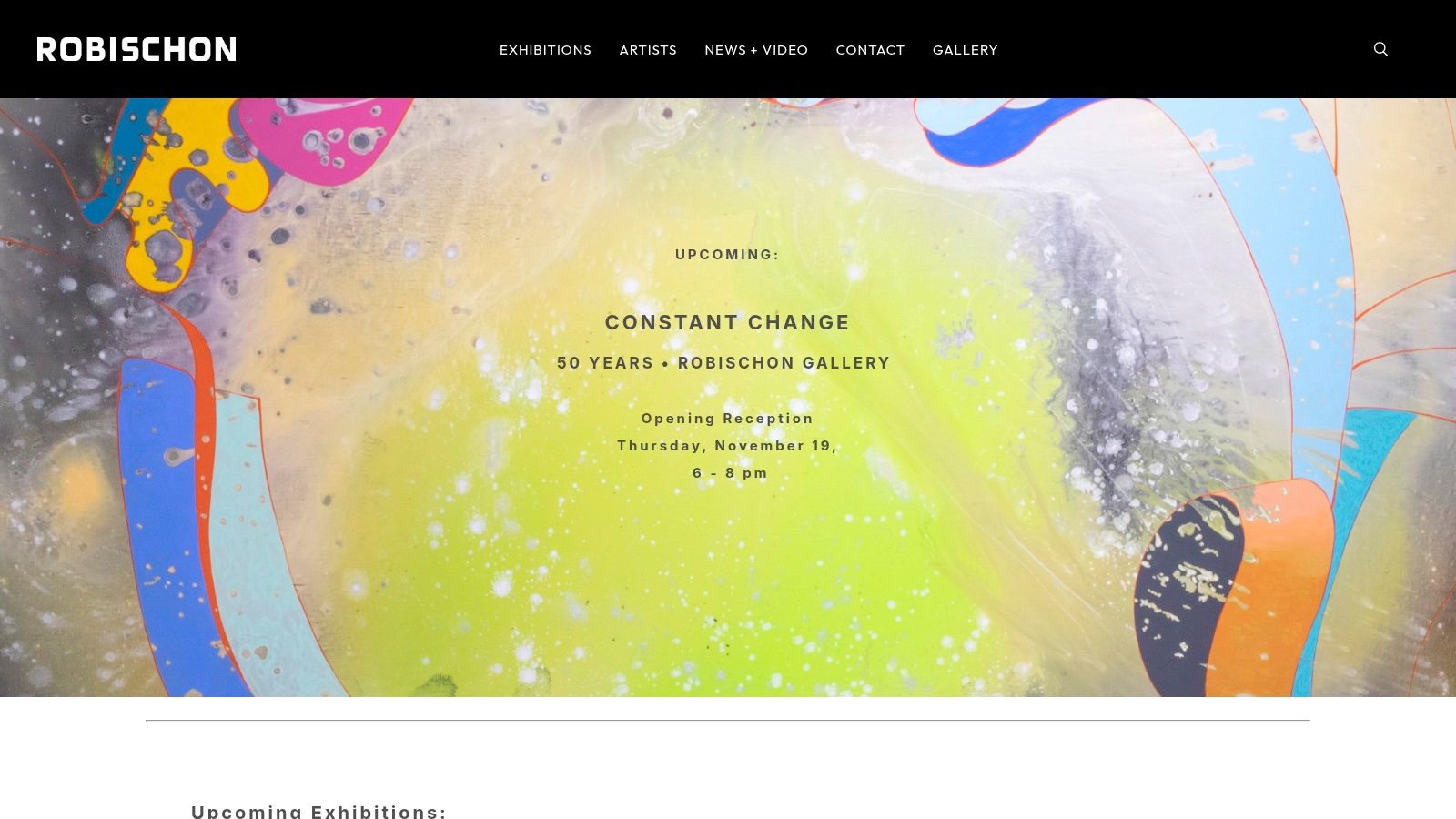
Robischon is a useful bridge between museum-going and collecting. Its contemporary program includes painting, sculpture, photography, drawing, and installation, making it a strong option when you want to compare different media within a gallery setting.
Start with the current exhibition pages on the Robischon Gallery website. Look at the installation images as well as individual artworks: an exhibition's relationships can matter as much as any piece viewed alone.
Unlike an encyclopedic museum, a commercial gallery doesn't promise something for every taste. If the current presentation doesn't connect with you, that's a reason to keep the stop brief, not a reason to dismiss the gallery.
Best visit type: A focused contemporary-art browse, with room for purchase questions.
Timing: Check public hours and exhibition dates before pairing it with MCA Denver. Don't assume museum and gallery schedules match.
Admission and access: Confirm visitor arrangements directly, especially for a group or a visit between exhibitions.
Browse first, ask specific questions second
Walk through before starting a purchase conversation. If a work stays with you, ask about its medium, dimensions, framing, availability, and any handling requirements.
For a collector, the practical distinction is between liking an image and wanting to live with the object. Texture, surface, and physical scale are reasons to browse art for sale in Denver in person rather than deciding entirely from a screen.
4. William Havu Gallery
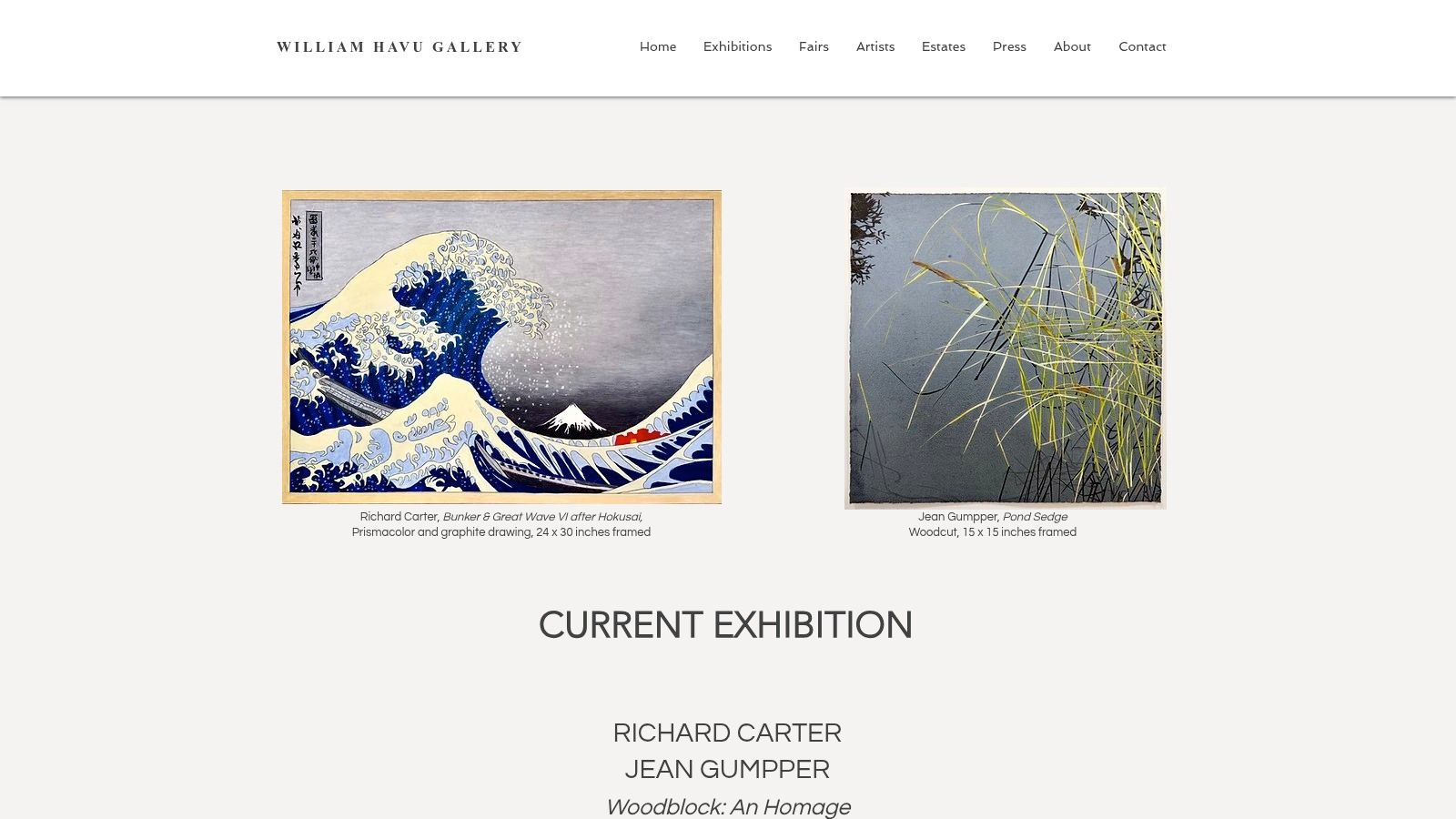
A museum visit can help you discover what you like. William Havu Gallery gives you a different question: what would you keep looking at every day? Its contemporary program includes realism and abstraction, with regional perspectives alongside work from farther afield.
The Golden Triangle location makes it a practical companion to the museum district. Preview the current show on the William Havu Gallery website, then confirm hours and visiting arrangements before building your route around it.
A collector's browse without the rush
For a first visit, focus on how the work behaves at different distances. Step back to read a composition, then move closer to examine the surface without touching it. An artwork that looks restrained online may feel assertive in person, while a visually busy image may become more coherent at full scale.
Don't reject a piece because you can't immediately name the wall for it. Record its dimensions and medium, then assess the room before making a placement decision.
The gallery's strength is a focused commercial presentation, not a museum-style approach. Your experience will depend on the exhibition, and an opening reception will serve a different purpose from an ordinary browsing visit.
For conversation about an individual work, ask when staff can give you unhurried attention. For a social introduction to the program, check the event calendar. Confirm whether your intended visit requires an appointment and whether any admission or event conditions apply.
5. K Contemporary

Follow the artist, not just the address, at K Contemporary. This is a good choice for visitors who want an artist-centered contemporary program rather than the reassurance of a broad permanent collection.
Begin with the exhibition and artist pages on the K Contemporary website. Read enough to understand the artist's materials and central concerns, but don't let the statement replace your own response to the work.
An exhibition can feel very different depending on whether it uses conventional wall displays, sculptural elements, or experiential presentation. That variability makes advance viewing worthwhile, particularly if someone in your group has specific access or sensory needs.
For a quick stop: Choose a current exhibition that already interests you instead of arriving with no idea what's showing.
For a collector's browse: Ask which works are available and whether related pieces can be discussed or viewed.
For scheduling: Confirm opening hours, appointment policies, exhibition transitions, and any event-specific admission arrangements.
Leave room for an unfamiliar response
K Contemporary makes sense when you're open to work that might challenge your existing preferences. It's less useful as a substitute for a museum survey, because a focused exhibition offers depth rather than coverage.
If you're combining it with LoDo stops, verify the current location and route before setting off. Grouping venues by name recognition alone is how an easy afternoon becomes a sequence of unnecessary transfers. Prioritize the exhibition you most want to see, then add another stop only if the timing works.
6. Gallery 1261
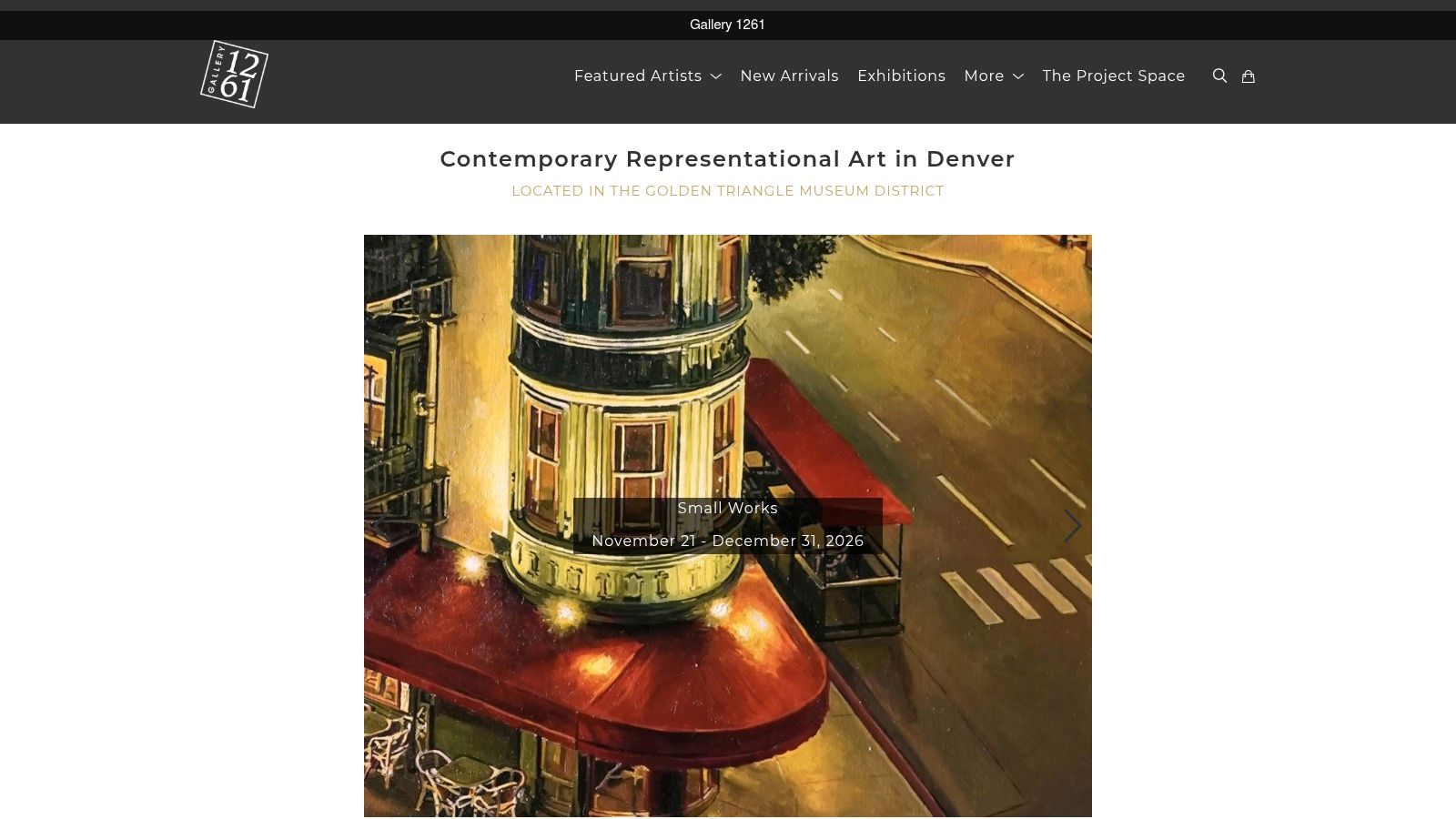
For visitors drawn to figurative and representational work, Gallery 1261 offers a useful counterpoint to more concept-led contemporary programs. Its Golden Triangle setting also makes it an appealing gallery addition to a Denver Art Museum afternoon.
Browse the current exhibition on the Gallery 1261 website before leaving. Online previews let you identify works you want to inspect closely, but color, paint handling, and the relationship between the image and frame still deserve an in-person look.
Put the narrower visiting window first
Don't automatically leave a commercial gallery until after the museum. Confirm Gallery 1261's current public hours and appointment availability, then place it earlier in your route if its access window is more restrictive.
That simple scheduling choice is more useful than trying to optimize every walking segment. Also confirm admission arrangements rather than assuming that every commercial exhibition follows an identical policy.
Collector's note: Ask for the artwork's outer framed dimensions, not just the image dimensions. The frame affects wall clearance, visual weight, and whether the piece fits its intended location.
The advantage here is purposeful browsing: you can preview, visit, and ask about a specific work without needing a full museum afternoon. The limitation is that rotating exhibitions may not feature the subjects or artists you expected.
For a purchase conversation, bring photographs of the intended room and note the wall material. Those details won't decide taste for you, but they'll help separate an aesthetic preference from a practical mounting problem.
7. Clyfford Still Museum
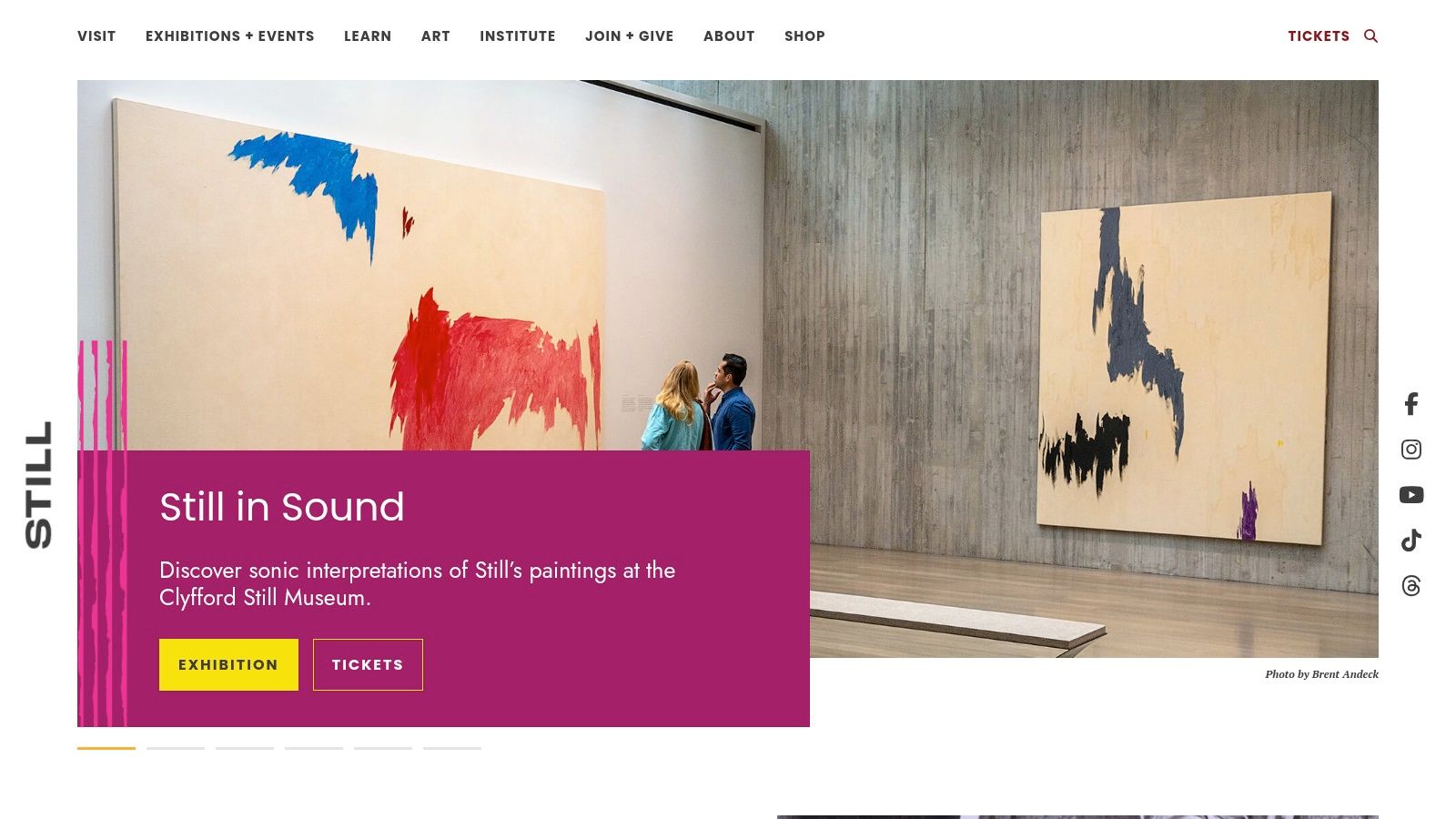
Choose the Clyfford Still Museum for concentration rather than variety. A museum devoted to an individual artist lets you notice recurring decisions about color, edges, scale, and surface that can disappear in a broad survey.
This is a particularly strong option if large-scale abstract painting interests you. It's a less obvious choice for a group that wants recognizable subjects or frequent changes in medium, so discuss that preference before buying admission.
Check the Clyfford Still Museum website for current tickets, opening days, digital interpretation, and group arrangements. Its museum-district location makes it a natural companion to Denver Art Museum, but visiting both works best when you keep the broader museum visit selective.
Let the paintings set the pace
Begin at a comfortable viewing distance, then change position. Notice how the composition reads across the room compared with what becomes visible close up, while respecting barriers and staff guidance.
Quick-stop suitability: Better for a focused visit than a hurried pass-through.
Best pairing: A selected collection at Denver Art Museum, or a neighboring commercial gallery for a change of context.
Practical access: Confirm seating, step-free routes, and any specific assistance you need before visiting.
The trade-off is clear: less variety, more sustained attention. Don't add this museum merely to increase your stop count.
If you're considering abstract work for a home or workplace, pay attention to viewing distance. A large painting needs an appropriate wall, but it also needs somewhere for the viewer to stand.
Denver Art Galleries at a Glance
Venue | Area | Typical Admission | Best For |
|---|---|---|---|
Denver Art Museum | Civic Center | $22–$25 for Colorado residents; $27–$30 for nonresidents | Exploring a broad range of art and galleries |
Museum of Contemporary Art Denver (MCA Denver) | Denver; specific area not stated | $15 for Colorado-resident adults; $18 for nonresidents | Seeing current contemporary art |
Robischon Gallery | LoDo | Not listed; check with gallery | Exploring rotating exhibitions across varied media |
William Havu Gallery | Golden Triangle Arts District | Not listed; check with gallery | Viewing contemporary art by regional and international artists |
K Contemporary | Not specified | Not listed; check with gallery | Discovering artist-focused contemporary exhibitions |
Gallery 1261 | Golden Triangle | No general admission fee listed | Browsing rotating exhibitions and artwork for sale |
Clyfford Still Museum | Denver museum district | $15 for Colorado residents; $18 for nonresidents | Exploring the work of Clyfford Still |
Plan Your Denver Art Day and Hang It Right When You Get Home
For a Golden Triangle afternoon, check the neighboring galleries' hours first, then choose Denver Art Museum or Clyfford Still Museum as your anchor. Visit Gallery 1261 or William Havu Gallery during its confirmed public window, and give the museum the remaining uninterrupted time. Trying to cover every museum collection and both galleries will turn looking into logistics.
For a LoDo afternoon, pair Robischon with MCA Denver. Check the exhibitions before choosing your order, and leave space for a break rather than filling every gap with another destination.
Practical information matters as much as the shortlist. Denver's IMAGINE 2020 arts survey report identified lack of time, insufficient event information, cost, and parking as participation barriers. Resolve those questions before leaving, especially if you're coordinating a family visit or need reliable mobility access.
Confirm the visit: Check current hours, exhibition dates, ticket conditions, and appointment requirements.
Plan the arrival: Identify parking or transit, the accessible entrance, and a realistic meeting point.
Prepare to collect: Save artwork details and ask about framing, handling, and pickup before arranging transport.
Great art experiences don't end at the gallery door. If you buy something you love, think about its placement, lighting, wall construction, and hardware before it comes home. A mirror, sculpture, framed photograph, and large canvas don't call for the same installation method.
Based in Lakewood, we bring over 15 years of picture hanging and art handling experience across the greater Denver metropolitan area, working with private collectors, corporate clients, and art institutions. Our free estimate covers art hanging, display, and installation. You can buy with confidence that professional installation is a phone call away, without having to solve every mounting detail while standing in the gallery.
Bring your Denver gallery find home with a plan for safe hanging and thoughtful placement. Visit Colorado Art Services to explore our art installation and placement services, then call 303-243-0066 for a free estimate for your home, office, or collection.
Comments