


Picture Hanging Tacks: When and How to Use Them
A picture hanging tack isn't a universal picture hanger. Its broad head and short, sharp shank make it useful for temporary, lightweight display, but those same features can become liabilities when they support a framed object, fragile wall, or valuable artwork. The right question isn't just, "Will this tack hold?" It's whether the wall, fastener, frame hardware, and consequences of failure make a tack a defensible choice.
The Reality of Picture Hanging Tacks
Picture hanging tacks are often treated as interchangeable with nails, hooks, and anchors. They aren't. A tack is a small fastener with a broad head that spreads finger pressure and holds a thin material, while its short shank penetrates a relatively soft surface. That geometry suits paper, posters, corkboards, and very light decorative items far better than it suits a framed piece with a concentrated load at one hanging point.
The historical record reinforces that distinction. Picture-hanging tacks belong to the broader family of drawing pins and thumbtacks, whose development spans more than a century of documented patent activity, evolving through repeated improvements rather than appearing as one universally standardized invention. Patent records for thumbtack development show how designers refined the form over time, rather than creating one fastener suitable for every wall and object.

Why the shape matters
A broad head helps you push or tap the tack into place, and it can hold paper without tearing through it. The shank, however, has limited engagement compared with a properly selected screw, picture hook, masonry anchor, or stud-mounted fastener. If the object pulls outward, shifts sideways, or rocks repeatedly, the tack may bend, loosen, or enlarge the hole around itself.
That makes the tack a conditional tool, not a miniature structural hanger. A lightweight, nonvaluable print in a stable room may be a reasonable temporary application. A glazed frame above a walkway, a heavy mirror, or an artwork with an unreliable wire calls for a different installation strategy.
Before touching a hammer, use a short safety check covering the object, wall, fastener, and surrounding people. A practical Take 5 safety checklist can help you pause before installation and identify obvious hazards that a quick decorating job tends to hide.
Practical rule: Choose a tack because the complete installation is light and low consequence, not because the tack is convenient to grab.
Understanding Load Limits and Safety Margins
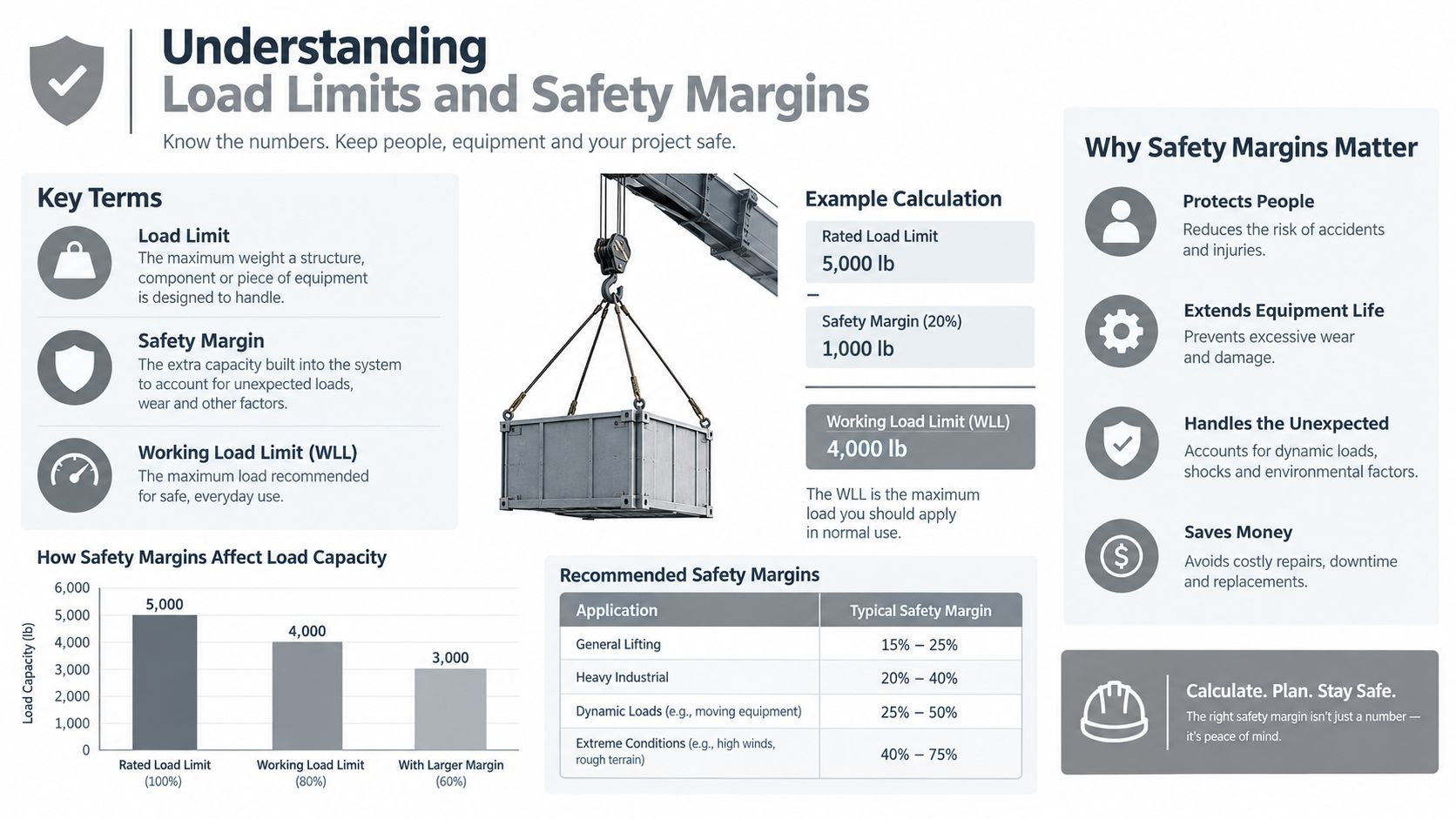
A package rating isn't a promise that the same fastener will perform identically in every wall. The substrate, insertion angle, depth, pull direction, frame hardware, and movement around the artwork all affect the result. A tack that feels firm when empty can still fail once the frame begins to twist or pull away from the wall.
Published reference values indicate that a basic nail in hollow drywall may support only about 5–10 lb before gypsum failure, and the commonly cited two-to-one rating margin compensates for installation variability but doesn't convert an ordinary thumbtack into a structural hanger. This wall-hardware guidance is useful because it treats capacity as dependent on installation rather than as a universal property of the nail.
Why two tacks don't automatically double capacity
Two weak points don't necessarily create one strong system. If one tack sits slightly higher, enters weaker gypsum, or receives more of the load because the hanging wire is off-center, the fasteners won't share the weight evenly. The frame can rotate toward the stronger point, increasing the pull on the weaker one.
Multiple fasteners can improve leveling and reduce twisting when they're correctly positioned and appropriately rated. They can't overcome a crumbling substrate, a bent tack, a damaged wire, or a frame joint that can't carry the load. Never treat the number of fasteners as a substitute for checking the complete load path.
A defensible pre-installation test
Start by weighing the fully assembled artwork, including the frame, glazing, backing, and hanging hardware. Then identify the wall construction and determine whether the fastener will sit in a stud, hollow drywall, plaster, masonry, or another material.
Use a fastener with a rating of at least twice the artwork's actual weight where a suitable manufacturer rating exists, while remembering that the margin is only useful when the rating applies to your substrate and installation direction. For a framed piece above roughly 10 lb, or for anything valuable, glazed, oversized, or located in a high-traffic area, use a rated hook, anchor, or stud-mounted screw instead of relying on ordinary picture hanging tacks. A more detailed guide to drywall load capacity can help you assess whether the wall itself, rather than the tack, is the limiting component.
A stable installation carries the object through the wall, fastener, frame hardware, and frame. Failure at any one point can bring the entire piece down.
Matching Fasteners to Wall Substrates
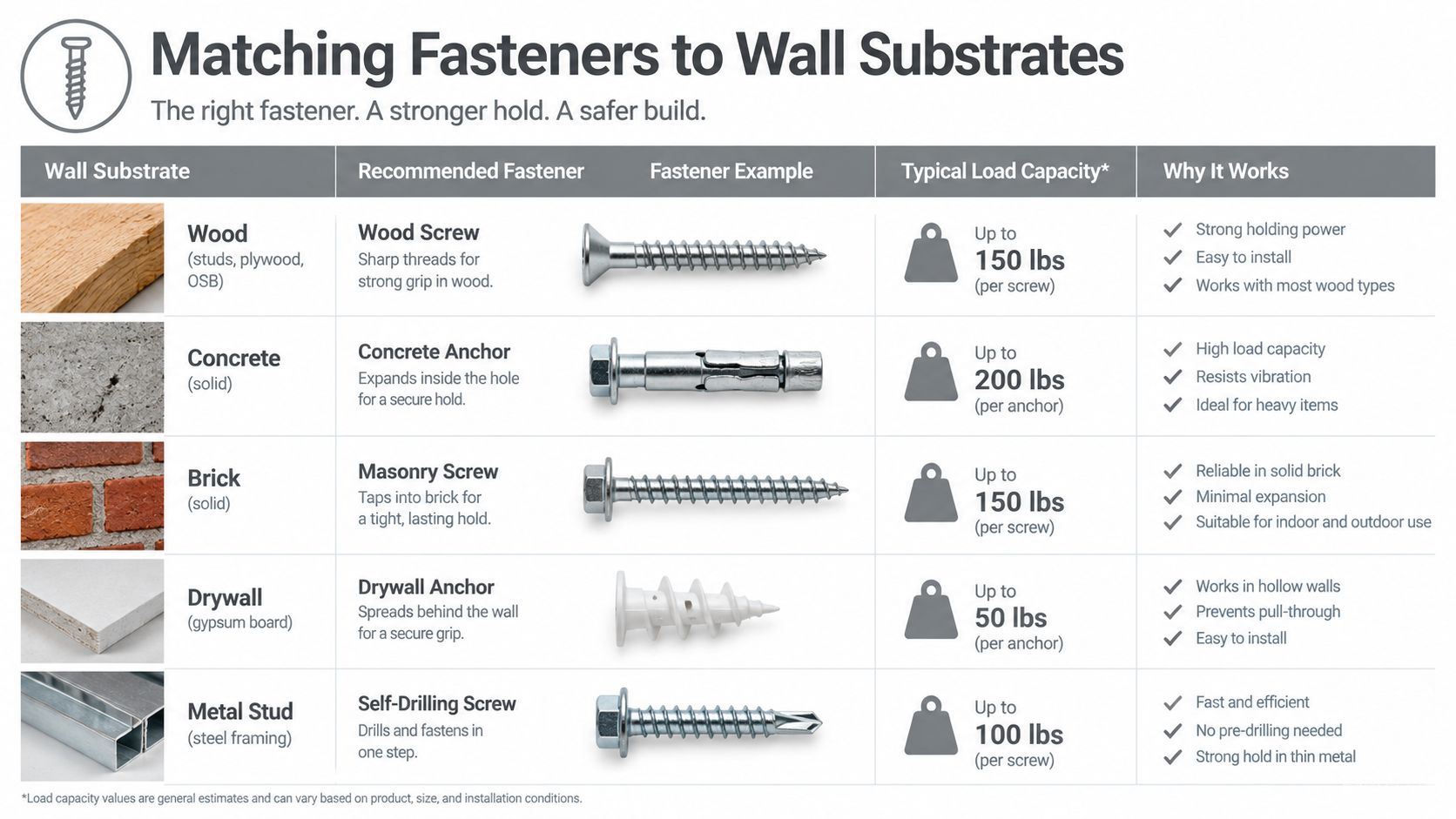
The wall behind the artwork determines what a fastener can do. Drywall, plaster, brick, concrete, and wood paneling don't offer the same penetration, friction, or pull-out resistance. Yet many consumer recommendations discuss only standard drywall, which encourages people to transfer a solution from one room to another without checking the construction.
Existing consumer guidance commonly focuses on drywall, even though plaster, brick, concrete, wood paneling, and other surfaces require different fasteners, and hangers suitable for drywall may not work on these materials. This comparison of picture hangers highlights why substrate identification must come before product selection.
Read the surface before choosing hardware
Drywall can accept a small nail or tack for a very light object, especially when the installation is temporary and the consequences of failure are limited. Hollow drywall becomes less forgiving as the load increases, because the fastener may pull through or crush the gypsum around the entry point.
Plaster may look like drywall from across the room, but it can be brittle, layered, or separated from its backing. A tack driven with force can chip the surface or create a larger damaged area than expected. Historic plaster deserves particular caution because a small crack can spread during installation.
Brick and concrete generally require masonry-specific drilling and anchors. A tack may bend, stop at the surface, or fail to achieve meaningful engagement. Don't substitute a harder hammer blow for the correct drill bit and anchor system.
Wood paneling or a stud can provide a reliable fastening point when the fastener reaches sound wood. Even then, the screw or hook must match the load and the frame hardware. Thin decorative paneling may not offer the same holding power as a structural stud behind it.
For a more detailed selection process, use this anchor selection guide to match hardware to the wall rather than choosing by appearance alone.
A simple identification routine
Tap lightly in an inconspicuous area, inspect an existing outlet or trim edge where appropriate, and use a stud finder when the construction is uncertain. If the wall is old, unusually thick, cracked, or covered in multiple finishes, assume the surface may behave differently from modern drywall until you verify it.
Techniques for Lightweight Art Installation
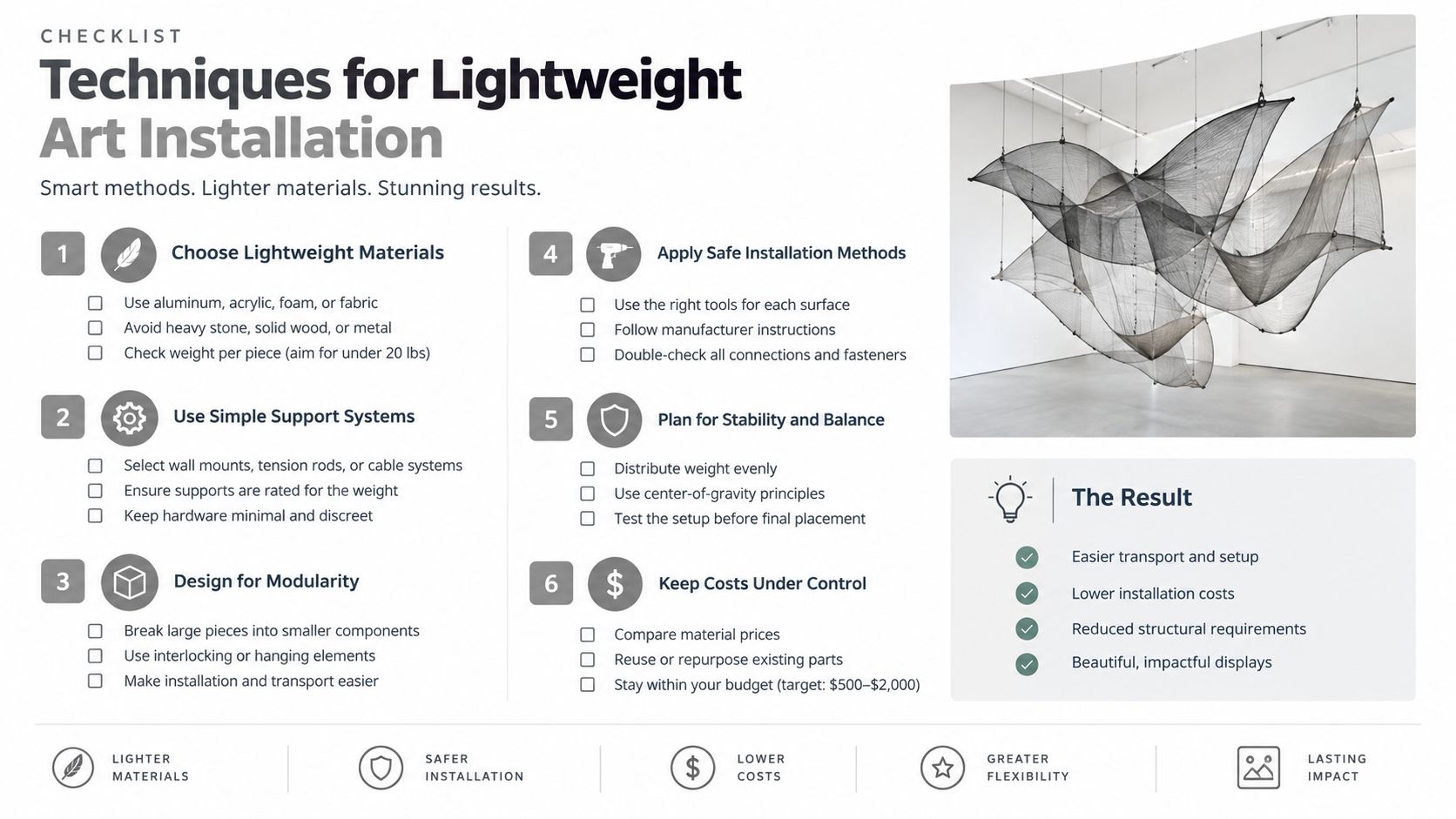
A tack can work for a lightweight, nonvaluable piece when the wall and frame hardware are suitable. The installation still needs to control movement. A loose frame can work a fastener out over time, especially near a door, stairwell, busy corridor, or vibrating appliance.
Begin with the frame rather than the wall. Inspect the joints, glazing, backing, eye screws, wire, and any existing hooks. If the wire is frayed, too thin, loosely attached, or stretched against a sharp edge, changing the wall fastener won't correct the underlying risk.
A careful sequence
Weigh the assembled piece. Include the frame, glazing, backing, and hardware. Don't estimate from the artwork alone.
Mark the centerline and height. Measure the wall and frame, then mark the desired position before making a hole. This prevents repeated tack placements that weaken the surrounding surface.
Use two support points when the frame allows it. For wire-hung work, two appropriately rated hooks positioned near the sides can share the load and reduce twisting. Level the points carefully so one fastener doesn't carry most of the weight.
Seat the frame fully. Confirm that the wire or D-rings remain engaged at both contact points. A frame that appears level can still sit partly off one hook.
Control rocking. Add suitable protective bumpers or a lower support where the frame moves against the wall. The aim is to limit repeated motion, not to turn bumpers into primary structural hardware.
Test before releasing the piece. Apply gentle pressure and look for movement, fastener deflection, frame separation, or contact between the artwork and wall.
Museum guidance specifically advises against hanging artworks from staples or bent tacks and recommends suitable-strength wire rather than fishing line or ordinary string to protect the frame and distribute the load. The Western Australian Museum's hanging guidance also supports anchoring hooks into studs where possible and adding suitable support for large or heavy paintings.
Adhesive systems can suit some lightweight applications, but they have their own surface and installation requirements. If you want a nonpenetrating option for an appropriate object, compare the manufacturer's conditions with the wall finish and consider how picture hanging strips are used rather than assuming every smooth wall is compatible.
When to Upgrade to Professional Hardware
The upgrade point arrives when failure would matter more than the convenience of a tack. That includes valuable artwork, glazing, mirrors, oversized frames, high placements, busy walkways, vulnerable occupants, and walls whose construction you can't confidently identify.
For a heavier or more consequential installation, select hardware that creates a known load path. Depending on the wall, that may mean a rated picture hook, a screw driven into a stud, a suitable drywall anchor, a masonry anchor, a cleat, or a supporting bracket. The choice should follow the wall and frame, not the appearance of the hardware in the package.
Situations that deserve a stronger system
Valuable artwork: Damage to the object may far exceed the cost of proper installation. Use sound wire or cleats, inspect the frame, and provide reserve capacity.
Glazed or oversized pieces: Glass adds both weight and consequence. A failed frame can create a falling-object hazard and damage the wall, floor, or surrounding furnishings.
High-traffic placement: Door movement, accidental contact, and vibration can turn a static load into a repeated dynamic load. A small tack is a poor choice where people regularly pass beneath the work.
Uncertain walls: If you can't distinguish drywall from plaster, masonry, or paneling, stop before drilling or hammering. A professional can identify the substrate and select compatible hardware.
Multiple-piece displays: A grid, salon arrangement, or large-format installation needs consistent layout and dependable engagement at every point. One weak fastener can disrupt the appearance and compromise a neighboring piece.
Using several cheap tacks can create false confidence. It may make the frame look secure during installation while leaving unequal loading, poor wall engagement, and a vulnerable frame connection. For collectors, offices, galleries, and facilities teams, engineered hardware is usually cheaper than repairing a damaged object, replacing glazing, or managing an injury after failure.
Colorado Art Services provides residential and commercial art installation, picture hanging, heavy-piece mounting, mirror and sculpture installation, high-placement work, and art storage across the Denver area and Front Range. That type of service is appropriate when the installation involves valuable objects, complex layouts, unfamiliar wall construction, or a consequence of failure that a homeowner shouldn't accept.
Making the Right Hardware Decision
A reliable decision combines more than the artwork's weight. Consider weight, value, height, occupancy, wall type, frame hardware, and vibration exposure together. An object may fall within a package rating and still deserve a stronger system if it's irreplaceable, glazed, positioned over people, or mounted to a questionable wall.
Installation condition | Sensible starting point |
|---|---|
Very light, temporary, nonvaluable item on a suitable soft wall | A sound tack may be acceptable after checking movement |
Lightweight framed work with reliable wire and low occupancy | Use appropriate support points and inspect the frame regularly |
Artwork on plaster, brick, concrete, or uncertain construction | Select substrate-specific hardware, not a generic tack |
Valuable, glazed, oversized, or high-traffic installation | Use engineered hardware with reserve capacity |
Heavy piece, high placement, or complex display | Use stud-mounted hardware, a cleat, bracket, or professional assessment |
The key question is not, “Does the advertised rating exceed the object weight?” It is, “Would I accept the consequences if this installation failed?” A practical risk matrix based on weight, value, height, occupancy, wall type, and vibration exposure addresses that decision when a package number alone isn't enough. This safe wall-decor installation guidance supports treating the installation as a complete risk assessment rather than a product comparison.
If you're moving or displaying valuable work, a broader guide to art handling in Sydney offers useful perspective on planning, protecting, and handling artwork beyond the final wall fastener. The same principle applies anywhere: protect the object first, then choose hardware that matches the structure and the consequences.
Colorado Art Services can assess wall conditions, select appropriate picture-hanging hardware, and install artwork, mirrors, sculpture, grids, and heavy pieces to a precise, museum-quality standard. If you have a valuable, oversized, high-mounted, or uncertain installation in the Denver Metro or Front Range area, visit Colorado Art Services to arrange professional help.
Comments