


Hotel Art Installation: How to Plan a Smooth, Professional Project
- 4 minutes ago
- 4 min read
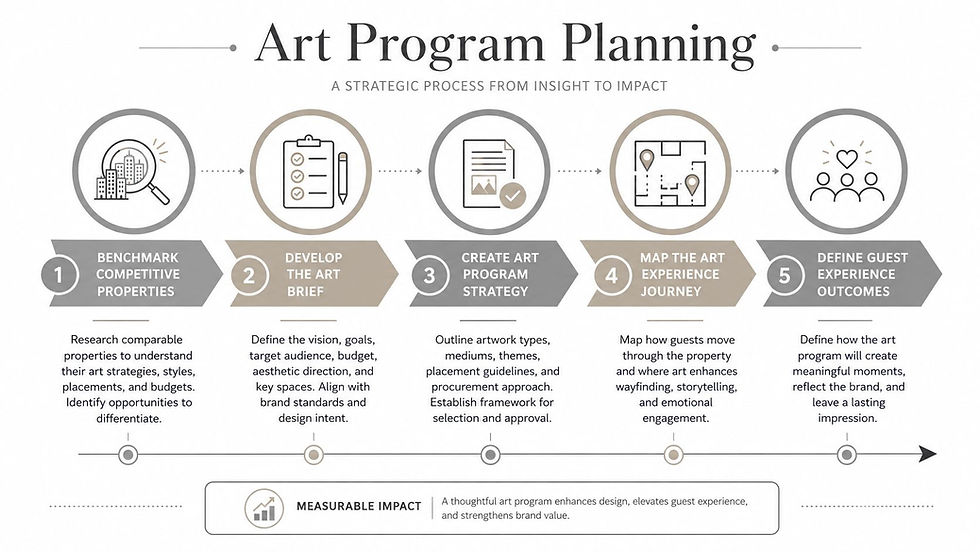
A hotel lobby may look finished—until the artwork arrives and the installation team discovers unknown wall backing, missing electrical connections, or a blocked delivery path.
Successful hotel art installation begins long before anything is placed on a wall. It requires coordination between designers, contractors, facilities teams, lighting professionals, installers, and hotel management. When these details are addressed early, installation day becomes a controlled process instead of an expensive improvisation.
What Hotel Art Installation Really Involves
Installation day is the final step in a much larger process. Before artwork arrives, the project team should have already confirmed:
Artwork dimensions and placement
Wall materials and load capacities
Mounting hardware and blocking
Lighting and electrical requirements
Delivery routes and equipment access
Installation schedules and safety requirements
The finished result should be more than artwork hanging on a wall. Every piece should be securely mounted, correctly positioned, properly illuminated, and protected from guest traffic and accidental damage.
Guestroom art, corridor collections, lobby statement pieces, restaurant installations, and sculptures each require different handling. This is why installation should be considered during the design process—not after the rooms are already finished.
If installers are solving wall, electrical, or access problems on installation day, planning started too late.
Establish the Concept and Approval Process
Strong hotel art programs begin with a clear curatorial direction. Before selecting artwork, determine how the property should feel and what role the collection will play in the guest experience.
Should the hotel feel local and welcoming, sophisticated and gallery-like, relaxed, or theatrical? Which spaces deserve statement pieces, and which areas need quieter supporting artwork?
Document these decisions in a written brief. One person should manage the program, stakeholders should have a defined opportunity to provide feedback, and final approval should happen before construction plans are finalized. This helps prevent endless revisions and keeps artwork aligned with wall construction, lighting, procurement, and delivery schedules.
Build a Complete Installation Budget
An effective budget includes much more than the purchase price of the artwork. The total installed cost may include:
Artwork acquisition or commissions
Framing and custom fabrication
Packing, shipping, and insurance
Installation labor and equipment
Specialty mounting hardware
Lighting and electrical coordination
Storage or multiple delivery windows
For a lobby collection, one practical approach is to dedicate approximately 40%–50% of the art budget to a primary anchor piece, 30%–40% to secondary focal works, and 20%–30% to supporting pieces.
Hotel art should also be viewed as part of the property’s brand strategy. A memorable collection can improve the guest experience, create valuable photography opportunities, support marketing campaigns, and help distinguish the hotel from nearby competitors.
Complete a Thorough Site Assessment
A detailed site walkthrough is one of the most valuable parts of the installation process.
Every proposed location should be inspected for:
Wall material and condition
Stud or blocking locations
Load capacity
Ceiling height
Nearby switches, thermostats, alarms, and sprinklers
Corridor and elevator dimensions
Loading-dock access
Required lifts, scaffolding, or rigging
Hotel operating hours and guest restrictions
Photograph each wall, measure every installation zone, and document the complete path from the loading area to the artwork’s final location. A piece that fits beautifully in the lobby is still a problem if its crate cannot fit through the elevator or doorway.
Electrical requirements should also be confirmed before walls are closed. Picture lights, digital displays, and illuminated installations may require outlets, low-voltage connections, or dedicated switching.
If the wall and delivery route cannot be verified, the installation should not be scheduled as though they can.
Choose the Right Mounting System
Mounting hardware should be selected according to the artwork’s weight, dimensions, substrate, and exposure to guest traffic.
Light framed pieces may work with D-rings or similar hanging systems when the wall is suitable. Larger works often benefit from French cleats or Z-bars, which distribute weight across a wider area. Heavy artwork may require structural anchors or additional blocking.
Sculptures require another level of planning. Bases, floor plates, and plinths must sit level, resist tipping, and remain stable in active public spaces. Large or heavy pieces may also require concealed anchors, seismic restraints, rigging equipment, and additional floor protection.
Never assume that drywall alone can support a substantial piece. Confirm the substrate and blocking before selecting hardware. For additional guidance, review our article on how to hang sculpture on a wall.
Coordinate Lighting and Guest Sightlines
Artwork should be installed where guests naturally slow down and notice it. Strong locations often include:
Lobby entrances
Front-desk sightlines
Elevator waiting areas
Seating and lounge spaces
Restaurant entry points
Major corridor transitions
Placement should reflect how guests use the room. In seated areas, lower sightlines may work better than artwork positioned primarily for standing viewers.
Lighting should be aimed and tested after the artwork is installed. Beam spread, color temperature, glare, and reflections can dramatically affect how a piece appears. Artwork illuminated only by general ambient lighting may look flat or disappear into the room.
For more information, explore our guide to accent lighting for art.
Protect the Artwork After Installation
The project is not complete until the property receives final documentation and a maintenance plan. Before closing the project:
Confirm insurance documentation
Photograph completed walls and installations
Record mounting hardware and anchor locations
Complete a final punch list
Establish cleaning and inspection procedures
Schedule periodic checks of anchors, cleats, and lighting
Artwork near windows may also require UV protection, while lobby and restaurant pieces may need more frequent cleaning. Keeping accurate records makes future maintenance, repairs, renovations, and collection changes much easier.
Select an Experienced Installation Partner
Price is important, but the lowest bid can quickly become expensive if poor planning results in delays, damaged finishes, or a second installation visit.
Ask prospective installers whether they can provide:
Examples of recent hospitality projects
References from general contractors or designers
Proof of appropriate insurance
A written, site-specific scope
Details about hardware, equipment, and wall conditions
A plan for coordination before installation day
Post-installation support
Colorado Art Services provides professional commercial art installation for hotels, including lobby programs, guestroom rollouts, framed collections, and sculpture placement. Visit Colorado Art Services to explore available services and begin planning your project.

Comments