


Corporate Office Decoration That Actually Works
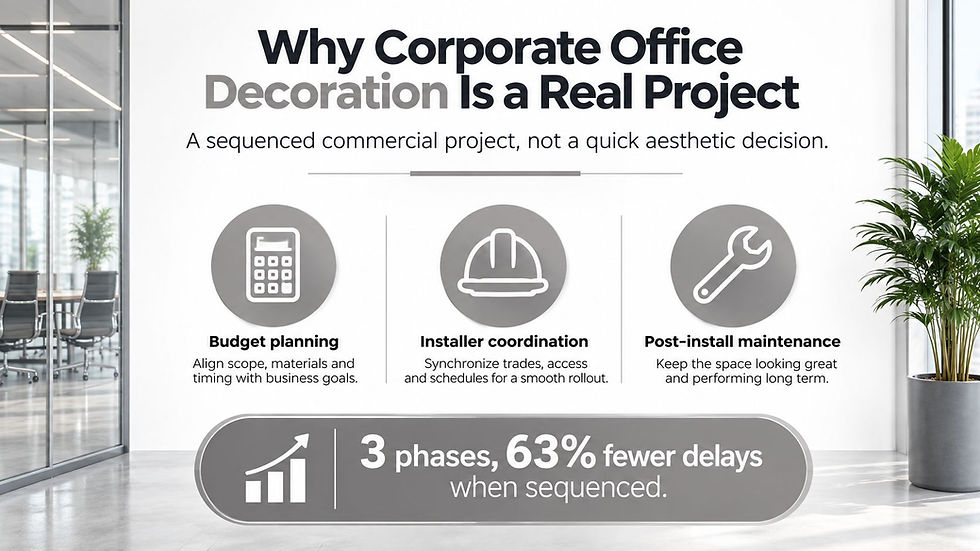
Corporate office decoration is more than choosing attractive artwork and filling empty walls. A successful project requires careful planning, accurate measurements, proper lighting, secure installation, and a clear understanding of how employees and visitors use the space.
When these details are handled correctly, office décor can strengthen your brand, improve wayfinding, create a more welcoming environment, and make the workplace feel complete.
Start With a Space and Use Audit
Before selecting artwork, walk through the entire office and document how each area functions. Measure available wall space, ceiling heights, windows, door swings, furniture placement, and major circulation paths.
Pay attention to where people naturally pause, gather, wait, or turn. These patterns can help determine where artwork will have the greatest impact without interfering with daily operations.
Ask employees practical questions:
Where does glare create problems?
Which areas feel cold, dark, or unfinished?
Are there spaces where nobody wants to sit?
Which hallways or rooms are difficult to navigate?
Are there walls that feel too busy or completely empty?
Direct observations such as “afternoon glare,” “dead space near the copier,” or “clients wait here” are often more useful than general requests to make the office feel warmer.
Once you understand the space, divide it into functional zones. Reception areas should reinforce the brand and welcome visitors. Conference rooms should support focus and client presentations. Corridors need simple, durable artwork, while quiet corners can become visual anchors or comfortable break areas.
Establish Your Brand Goals and Budget
Office décor should reflect the company’s personality without overwhelming the workplace. Decide what you want the environment to communicate. Should it feel creative, sophisticated, welcoming, energetic, or calm?
Use those goals to guide your colors, materials, artwork, lighting, and layout. Consistency matters more than decorating every wall. A few thoughtfully selected pieces will usually make a stronger impression than a collection of unrelated items.
Your budget should cover more than the artwork itself. Remember to include:
Custom framing
Professional hanging hardware
Wall preparation and repairs
Picture or accent lighting
Lift or ladder access
Delivery and transportation
Professional installation
Final adjustments and touch-ups
Reception areas, boardrooms, and other client-facing spaces typically deserve the largest investment. Employee areas can often use simpler framed collections, local artwork, or modular display systems that are easy to update.
Always leave room in the budget for unexpected conditions, including plaster repairs, concrete drilling, additional wall support, or placement changes after the furniture arrives.
Choose Artwork and Materials for Each Space
Different areas of an office require different decorative solutions.
Framed artwork is a flexible choice for reception areas, conference rooms, offices, and hallways. It can be arranged individually or as a grid and replaced easily when the office needs an update.
Large-format artwork, dimensional logos, and branded feature walls create a stronger focal point but require careful measurements, appropriate structural support, and clear sightlines.
Sculptures and other three-dimensional pieces can add depth to reception areas and collaboration spaces. However, they must have enough clearance to avoid interfering with employees, visitors, carts, or equipment.
Mirrors can make smaller or darker areas feel more open, but they need secure mounting and thoughtful placement to prevent glare.
Materials should also match the amount of traffic in the room. Busy hallways and shared spaces benefit from durable frames, secure mounting systems, and surfaces that are easy to clean. Delicate or highly detailed pieces are often better suited for conference rooms, executive offices, and lower-traffic areas.
Local and commissioned artwork can also help connect the office to its community while giving the space a more original identity than stock décor.
Plan the Lighting and Installation Together
Even excellent artwork can look flat or distracting under poor lighting. Review the room’s natural light, overhead lighting, task lighting, and potential accent lighting before deciding where each piece should go.
Watch for reflections on glass, shadows across artwork, and glare that could affect computer screens. Artwork should remain visible throughout the day without making nearby workspaces uncomfortable.
Wall construction also matters. Drywall, plaster, brick, and concrete all require different hardware and installation methods. Heavy artwork, mirrors, sculptures, and dimensional displays may require rated anchors, additional blocking, or specialized equipment.
Never assume a wall can support a piece based on appearance alone. A professional site visit can identify structural concerns before the artwork is ordered or delivered.
Make Better Use of Forgotten Areas
Corners, elevator landings, narrow hallways, and spaces outside conference rooms are often overlooked. Instead of filling them randomly, give each area a purpose.
A dark corner might benefit from a smaller piece of bright artwork and focused lighting.
A hallway can use a repeating gallery arrangement to guide people through the building. An elevator landing may only need one strong image or branded element to create a clear transition point.
Ask one question: If this space worked better, what job would it perform?
It might improve wayfinding, provide a short waiting area, soften noise, reinforce the brand, or create a visual break between work zones. This approach turns decoration into a functional part of the office.
Coordinate the Installation Carefully
Schedule installation after major furniture moves, painting, electrical work, and construction are complete. Whenever possible, arrange the work during lower-occupancy hours to reduce interruptions.
Before installation day, provide the crew with:
Measured layouts
Photos of each wall
Artwork and hardware specifications
Room names and placement notes
Building access information
One on-site contact who can approve decisions
After installation, inspect every room. Check the height, level, spacing, wall condition, and appearance from the main approach. Photograph the completed work so future employees or contractors have a placement record.
Artwork and hardware should also be inspected periodically for dust, shifting, damage, or loose components. Modular displays, movable artwork, and adjustable lighting can help the office adapt as teams, rooms, and branding change.
Create an Office That Lasts
The best corporate office decoration projects do more than improve appearance. They create an organized, welcoming environment that supports employees, guides visitors, and communicates the company’s identity.
Colorado Art Services installs corporate artwork, mirrors, sculptures, and large-format displays throughout Denver and the Front Range. From layout planning and heavy-piece mounting to final leveling and inspection, our team provides the careful handling and professional installation needed to make your office feel complete.
Contact Colorado Art Services to begin planning your corporate art installation or office refresh.


Comments