


Hanging Art in a Bathroom: A Practical Guide
Artwork can turn a bathroom into a more inviting, finished space. But steam, splashes, and condensation make hanging art in a bathroom different from decorating a living room.
The key is choosing suitable materials, finding a drier location, and using secure hardware. Here’s how to enjoy bathroom artwork while reducing the risk of moisture damage.
Why Bathroom Moisture Matters
Repeated humidity changes can cause paper to buckle, canvas to warp, wood frames to swell, and metal hardware to rust. Damage can also develop behind the artwork, where damp backing boards and frame joints are easy to overlook.
Even a piece that never gets splashed can collect condensation. Good ventilation is essential, and protective framing cannot make up for a bathroom that stays damp.
Save valuable originals, sentimental photographs, and delicate works on paper for rooms with more stable conditions.
Choose the Right Artwork and Frame
Think about the entire piece: the image, glazing, frame, backing, and hanging hardware all need to suit the space.
Metal prints are often a practical option because they are rigid and easy to clean. Confirm that the manufacturer considers the finish suitable for humid rooms.
Paper prints and photographs need protective glazing and a properly fitted backing. Ask a professional framer about moisture protection; an ordinary frame does not create a waterproof enclosure.
Canvas requires more caution. A protective coating may help with occasional humidity, but raw canvas is a poor choice for a frequently steamy bathroom.
For frames, consider powder-coated aluminum or other moisture-tolerant finishes. Untreated wood and MDF are more vulnerable to moisture.
Acrylic glazing is lighter and less prone to shattering than glass, although it scratches more easily. Either option needs appropriate framing and secure mounting.
Find a Drier Location
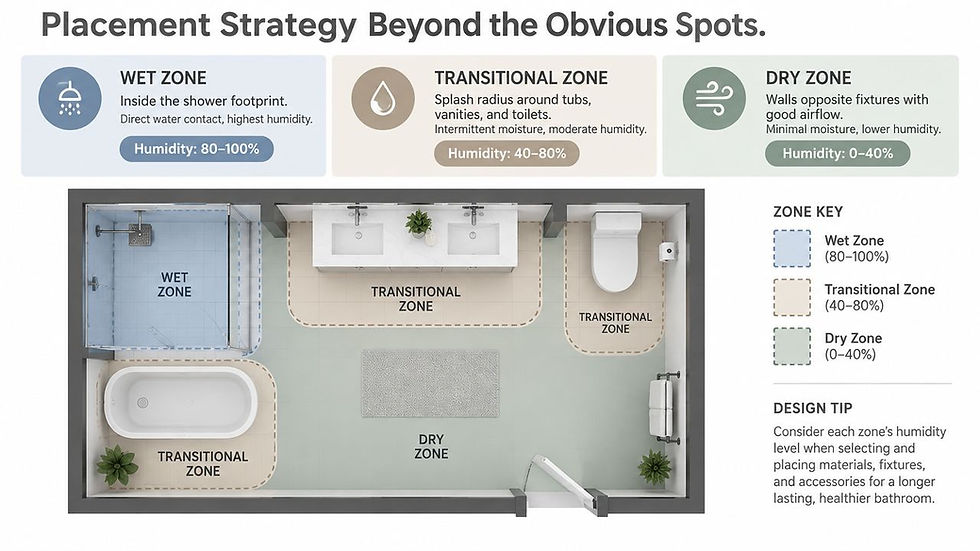
Before choosing an empty wall, watch how moisture moves through the room during and after a shower.
Avoid direct spray, frequent splashes, and surfaces where condensation lingers. Look for a wall away from the shower or tub with good airflow.
Common locations include:
Above the toilet: Often an open wall, provided it stays dry and the door does not block the artwork.
Beside the vanity: Works well when the piece sits beyond the sink’s splash area.
Above a towel bar: Leave enough clearance so damp towels cannot brush the frame.
In an alcove: Suitable for smaller pieces if the recess does not trap humid air.
Tape the artwork’s dimensions on the wall before drilling. Check the view from the doorway and vanity, along with door swings, cabinets, and cleaning access.
Use Secure, Suitable Hardware
The right mounting method depends on the wall material and the artwork’s complete weight, including the frame and glazing.
Drywall, plaster, masonry, and tile require different fasteners. Follow the hardware manufacturer’s load ratings, and use structural support where needed for heavier pieces.
Choose corrosion-resistant screws, hooks, and hanging components. Tile installations need particular care because drilling can crack the surface or affect waterproofing. Check for concealed plumbing and wiring before making holes.
Small spacers behind the frame can help air circulate and prevent the backing from resting directly against a damp wall. For heavy artwork or uncertain wall conditions, professional installation is a sensible choice.
Check Lighting and Reflections
Bathroom mirrors and vanity lights can create distracting glare on framed artwork. Before finalizing placement, turn on the lights and check the piece from normal viewing positions.
Adjusting the artwork’s position may solve reflections more effectively than adding brightness. If installing accent lighting, choose fixtures approved for the location and follow applicable electrical requirements.
Keep Moisture Under Control
Run the exhaust fan during showers and afterward until lingering steam clears. If condensation regularly remains on the frame or wall, improve ventilation or move the artwork.
During routine cleaning:
Use a soft cloth and a cleaner suitable for the glazing.
Keep cleaning liquid away from frame joints and backing.
Check for rippling, discoloration, loose joints, or rust.
Occasionally inspect the wall and hardware behind the piece.
Remove artwork if moisture damage appears so you can address the cause before rehanging it.
Bring Art Into Your Bathroom With Confidence
A successful bathroom installation combines thoughtful placement, moisture-tolerant materials, effective ventilation, and secure mounting.
Colorado Art Services provides professional picture hanging and art installation throughout the Denver Metro area and Front Range. Contact the team for help choosing a location and mounting your bathroom artwork securely.


Comments