


9 Picture Hanging Displays for Any Space

The right picture hanging display can turn an empty wall into a focal point, tell a story, or bring balance to a room. Whether you're arranging family photos, showcasing a collection, or installing oversized artwork, the best layout starts with the space.
Consider the wall size, nearby furniture, lighting, and how people move through the room. Then choose a display style that complements both the artwork and its surroundings.
1. Gallery Wall or Salon Display
A gallery wall brings different sizes, frames, and art styles together in one arrangement. It's ideal for personal collections, living rooms, offices, and eclectic interiors.
Start with your largest piece as an anchor, then arrange smaller works around it. Lay everything on the floor first and use paper templates to test the layout on the wall. Keep gaps deliberate and balance the visual weight across the group.
Best for: Varied collections and walls with plenty of personality.
2. Grid Display
A grid uses evenly spaced rows and columns to create a clean, organized look. Matching frames and mat sizes help unify photography, prints, or a themed series.
Precision matters here. Measure the complete arrangement, establish its center, and work outward. A laser level helps keep rows and columns aligned. Check the display from the doorway as well as directly in front of it.
Best for: Modern interiors, office corridors, and photography collections.
3. Single Statement Artwork
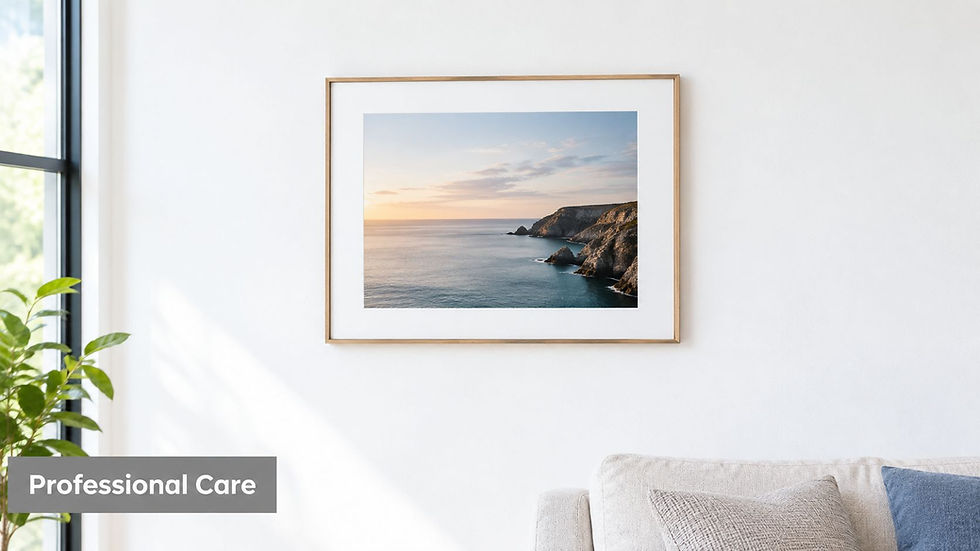
One large piece can give a room a clear focal point without filling the wall. This approach works well above a sofa, fireplace, or credenza, and in entryways or executive offices.
Choose artwork that feels proportional to the furniture and available wall space. For an open wall, a center height of roughly 57–60 inches is a useful starting point; adjust for furniture and seated viewing. Test lighting to avoid reflections on glazed artwork.
Best for: Rooms that need one strong visual anchor.
4. Diptych or Triptych
A diptych features two coordinated pieces; a triptych features three. Both create balance while allowing a composition or theme to extend across several panels.
Center the entire group over the furniture or architectural feature below it. Keep the gaps consistent and align the panels carefully so they read as one composition. Matching frames can strengthen the effect.
Best for: Bedrooms, dining rooms, reception areas, and displays above sofas.
5. Mirror and Artwork Combination
Combining a mirror with artwork adds depth and can make a room feel brighter and more spacious. Coordinated frame finishes help connect the pieces.
Before hanging, check what the mirror will reflect from different positions. A thoughtful reflection can enhance the room, while clutter or a bright fixture may distract from the art. Large mirrors also require hardware suited to their weight and the wall construction.
Best for: Entryways, smaller rooms, and spaces that benefit from reflected light.
6. Floating Shelves or Picture Ledges
Picture ledges offer an easy way to rotate framed art and combine it with books, ceramics, and small decorative objects.
Start with a larger frame, layer smaller pieces around it, and leave room between groups. Keep the arrangement curated rather than crowded. Secure the shelf properly and account for the combined weight of everything it holds.
Best for: Home offices, apartments, studios, and frequently refreshed displays.
7. Large-Format Canvas or Oversized Art
Oversized artwork can bring proportion and impact to expansive walls, lofts, and commercial lobbies.
Plan the installation before delivery. Measure doorways, stair turns, and elevators, and confirm the wall can support the piece. Lighting should cover the work evenly. Heavy, fragile, or elevated installations are good reasons to involve experienced art installers.
Best for: High ceilings, open interiors, and large feature walls.
8. Staircase or Corridor Display
Staircases and hallways can become galleries that unfold as people move through the space. Family photographs or themed collections work particularly well.
For stairs, let the arrangement follow the rise of the staircase. In corridors, use a consistent visual line and spacing. Check the layout from both directions, keep pathways and safety equipment clear, and use secure hanging hardware.
Best for: Transitional spaces and collections with a story to tell.
9. Rotating or Seasonal Display
If your artwork changes regularly, picture rails or adjustable hanging systems make updates easier and reduce repeated wall repairs.
Choose a system suited to the artwork's weight and dimensions. Photograph successful arrangements and record their measurements for future use. Plan protected storage for pieces between rotations and adjust lighting when the display changes.
Best for: Galleries, collectors, hotels, and businesses with changing collections.
Plan Before You Hang
Whatever style you choose, review a few essentials before drilling:
Scale: Make the arrangement relate to the wall and nearby furniture.
Spacing: Treat the display as a complete composition.
Lighting: Check glare and avoid direct sunlight on sensitive artwork.
Support: Match hardware to the artwork's weight and wall construction.
Sightlines: View the layout from seating areas, entrances, and walkways.
Paper templates help you test placement before committing. Once installed, photograph the finished display so it is easier to recreate later.
Bring Your Display to Life
Colorado Art Services helps homeowners and businesses turn layout ideas into finished installations. From gallery walls and precise grids to oversized artwork, mirrors, and sculpture, professional support can make placement and mounting easier.
Contact Colorado Art Services for picture hanging, residential and commercial art installation, local art moving, and storage support.

Comments