


Commercial Art Display: A Practical Guide for Every Space
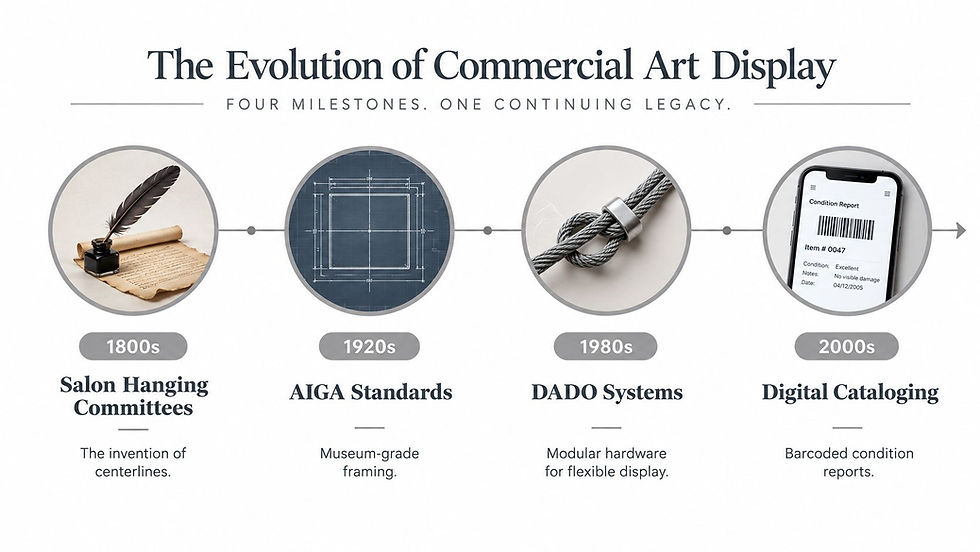
Art can turn a blank lobby into a welcoming entrance, give an office personality, and make a retail space more memorable. A successful commercial art display also needs thoughtful placement, secure mounting, suitable lighting, and a plan for ongoing care.
Whether you’re furnishing a workplace or preparing a gallery exhibition, these essentials help protect your investment and create a display that works for the space.
What Is a Commercial Art Display?
A commercial art display presents artwork, graphics, or sculptural objects in a business or public setting. Common locations include offices, hotels, retail stores, healthcare facilities, galleries, and corporate lobbies.
These environments bring practical considerations such as foot traffic, cleaning equipment, security, changing layouts, and building requirements. The artwork, mounting system, lighting, and visitor route all need to work together.
Choose your display infrastructure alongside the artwork. Before purchasing a piece, consider how it will be installed, protected, maintained, and eventually moved.
Match the Artwork to the Space
Each environment has a different purpose, and your display should support it.
Corporate lobbies: Choose artwork that makes an impression from the entrance. A large statement piece can create a clear focal point.
Offices: Use artwork that supports the company’s identity and creates a comfortable atmosphere. Consider both seated and standing viewers.
Retail stores: Plan for seasonal campaigns and changing merchandise. Flexible hanging systems can make updates easier.
Hotels and hospitality spaces: Balance visual appeal with durability, housekeeping needs, and frequent guest traffic.
Galleries: Prioritize accurate presentation, careful handling, adjustable lighting, and room for visitors to move comfortably.
Consider where people will encounter the artwork and how long they are likely to view it.
Plan the Layout Before Drilling
Start with the viewer’s sightline. Artwork in a reception area may need different placement than a piece viewed from a conference table.
For a group of works, establish a consistent organizing principle. Align centers or edges, use a grid, or create a deliberate arrangement with balanced spacing. A collection feels more cohesive when the placement has a clear rhythm.
Give a statement piece enough surrounding space to stand out. For a denser gallery wall, use related framing, colors, or themes to connect the pieces.
Before installation, mark the frame outlines with paper templates or suitable removable tape. Walk through the space and check the arrangement from entrances, seating areas, and main pathways. Account for doors, furniture, outlets, and building equipment.
Choose Mounting Systems That Fit the Job
The correct hardware depends on the artwork’s weight, the wall construction, and the location. Drywall, masonry, concrete, and wood backing require different installation approaches.
Heavy or oversized pieces need verified support and hardware rated for the load. Public spaces may also benefit from security hangers that reduce accidental movement or unauthorized removal.
For displays that change frequently, picture rails and cable systems offer flexibility while reducing repeated wall repairs.
A qualified installer can assess the wall, select appropriate hardware, and plan access for fragile, elevated, or unusually heavy artwork.
Light the Art With Care
Lighting should help visitors see the work clearly while protecting its materials. Paper, photographs, and textiles can be particularly sensitive to prolonged light exposure.
Avoid direct sunlight where it could damage the artwork, and check for reflections from windows, overhead fixtures, screens, and polished floors.
Adjustable track lighting can support rotating displays, while wall washers can illuminate larger surfaces. Fixture placement, brightness, and color rendering all affect how the artwork appears.
Test the lighting from the visitor’s actual viewing positions and at different times of day.
Budget for Ongoing Care
Include installation, lighting, maintenance, future moves, and wall repairs in your budget.
Keep a simple record of each piece’s location, condition, mounting method, and handling instructions. Photograph artwork before moving it and inspect displays after renovations or furniture changes.
Routine care should include checking hardware, dusting appropriate surfaces, and reviewing lighting. Avoid spraying cleaning products directly onto artwork or glazing.
Bring in Professional Help When Needed
Professional installation is especially valuable for heavy, fragile, valuable, or high-mounted pieces, as well as displays in busy public areas.
Ask about insurance, experience with your wall construction, condition documentation, and the written installation scope. A clear plan should cover placement, hardware, access, and future removal.
Colorado Art Services handles commercial art installation, gallery layouts, heavy-piece mounting, high-placement work, local art moving, and secure storage across the Denver Metro area and Front Range. Contact the team to plan a display that fits your space and supports its long-term care.

Comments