


7 Expert Picture Hanging Tips for a Perfect Layout
Hanging artwork seems simple until spacing, wall type, lighting, and hardware all start working against you. A frame can be level and still feel “off” if it’s too high, poorly spaced, or mounted incorrectly. These professional picture hanging tips will help your artwork look intentional, balanced, and secure.
1. Use the Eye-Level Rule
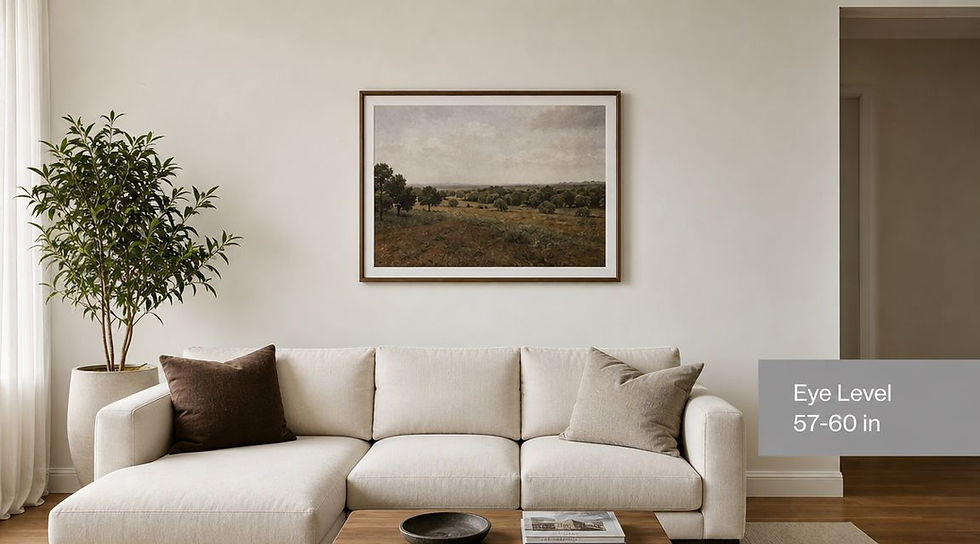
One of the biggest mistakes is hanging art too high. A good baseline is the classic 60-inch rule, where the center of the artwork sits about 57 inches from the floor. This creates a comfortable viewing height commonly used in galleries and professionally designed spaces.
When hanging above furniture, keep the artwork visually connected to the sofa, table, or console below it. Large gaps can make the room feel disconnected.
Pro Tip: Treat gallery walls as one large composition and measure from the center of the entire arrangement, not each individual frame.
2. Match Hardware to the Wall
Not every wall is drywall. Homes and offices may include plaster, brick, concrete, or tile, and each surface requires different hardware.
Before hanging heavy artwork:
Locate studs whenever possible
Use proper anchors if mounting between studs
Consider French cleats for oversized or heavy pieces
Using the wrong anchor is one of the most common causes of wall damage and falling artwork.
Best Practice: Always match the hardware to both the wall type and the artwork weight.
3. Plan Gallery Walls Before Drilling
A great gallery wall feels cohesive, not random. Spacing is the key.
A general rule is to leave 3–6 inches between frames and keep spacing consistent throughout the layout.
Grid Layouts
Best for:
Offices
Hallways
Formal spaces
These use matching frames and equal spacing for a clean, organized look.
Organic Layouts
Best for:
Living rooms
Creative spaces
Stairways
These mix sizes and orientations while still following an invisible structure.
Pro Tip: Lay everything out on the floor first or use paper templates on the wall before drilling holes.
4. Balance Symmetry and Asymmetry
Symmetrical layouts create a polished, formal appearance and work well over fireplaces, credenzas, and conference room furniture.
Asymmetrical layouts feel more modern and creative, but they still need balance. A large frame can be balanced with several smaller pieces, and negative space plays an important role.
Even if measurements are perfect, visual weight ultimately determines whether a layout feels right.
5. Consider Lighting
Lighting can dramatically improve—or ruin—artwork presentation.
Common issues include:
Glare from windows
Harsh spotlighting
Uneven illumination
Track lighting works well for multiple pieces, while picture lights are ideal for statement artwork.
Lighting Tips
Check artwork from different viewing angles
Use dimmers whenever possible
Avoid direct glare on glass
Consider UV protection for valuable pieces
The goal is to enhance the room first while still showcasing the artwork.
6. Use French Cleats and Rail Systems for Flexibility
French cleats and hanging rail systems provide stronger, cleaner, and more adjustable mounting solutions than standard hooks.
French Cleats
Best for:
Heavy mirrors
Large artwork
Contemporary installations
Rail Systems
Best for:
Offices
Galleries
Rotating collections
These systems reduce wall damage and make repositioning artwork much easier over time.
7. Assess Wall Conditions Before Hanging
The wall itself determines the installation method. Older plaster, soft drywall, masonry, and textured finishes all behave differently.
Before drilling:
Inspect for cracks or weak spots
Use the correct drill bit and anchor
Test the mount after installation
Add bumpers behind frames to prevent wall marks and tilt
Many expensive repairs start with one poorly placed hole.
DIY vs. Hiring a Professional
Simple installations can absolutely be handled yourself with careful measuring and the right hardware. But professional installation becomes valuable when dealing with:
Heavy artwork
Oversized mirrors
Stairwells
Masonry or plaster walls
Multi-piece gallery layouts
Commercial spaces
Professional installers help with more than drilling. They evaluate spacing, sightlines, lighting, wall structure, and long-term stability to create a polished final result.
For homeowners and businesses in the Denver Metro area, Colorado Art Services specializes in professional art installation, gallery walls, heavy-piece mounting, and picture hanging solutions.


Comments